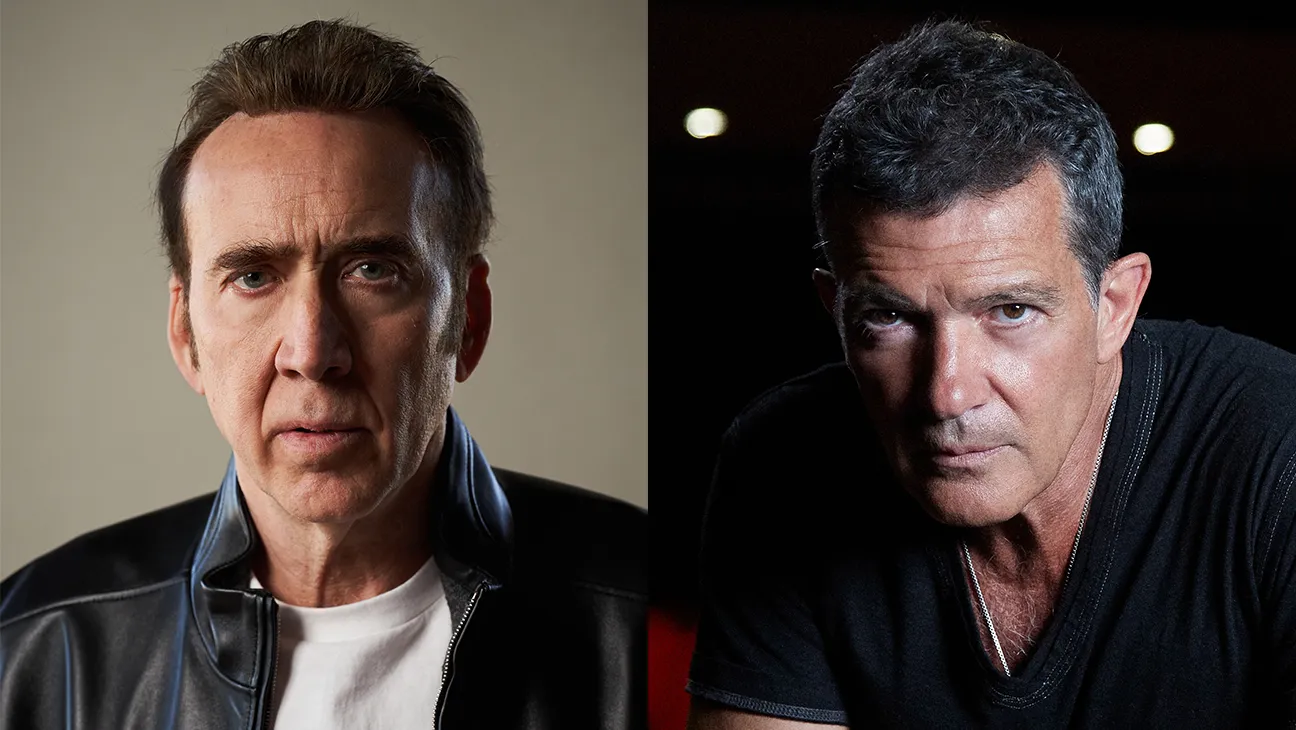
Nicolas Cage and Antonio Banderas will investigate together in the fifth season of True Detective. HBO has now officially confirmed it. What True Detective actually is, however, is still surprisingly difficult to define.
More Than a Simple Murder Case
Long before the first season of True Detective, crime series were already pushing the boundaries of the genre in different directions. We had seen plenty beyond the traditional “whodunit”. There was The Wire, The Killing, not to mention Twin Peaks, and many more examples could be added to the list.
But in 2014, writer Nic Pizzolatto and director Cary Joji Fukunaga combined existing elements in a particularly unusual way. Rust Cohle (Matthew McConaughey) and Marty Hart (Woody Harrelson) begin investigating a ritualistic murder in Louisiana. As they move deeper into the case – or perhaps sink into it – an increasingly strange world opens up around them, where crime becomes entangled with religion, local power structures, old secrets and some of the darkest aspects of human nature. Along with a certain amount of existential philosophy.
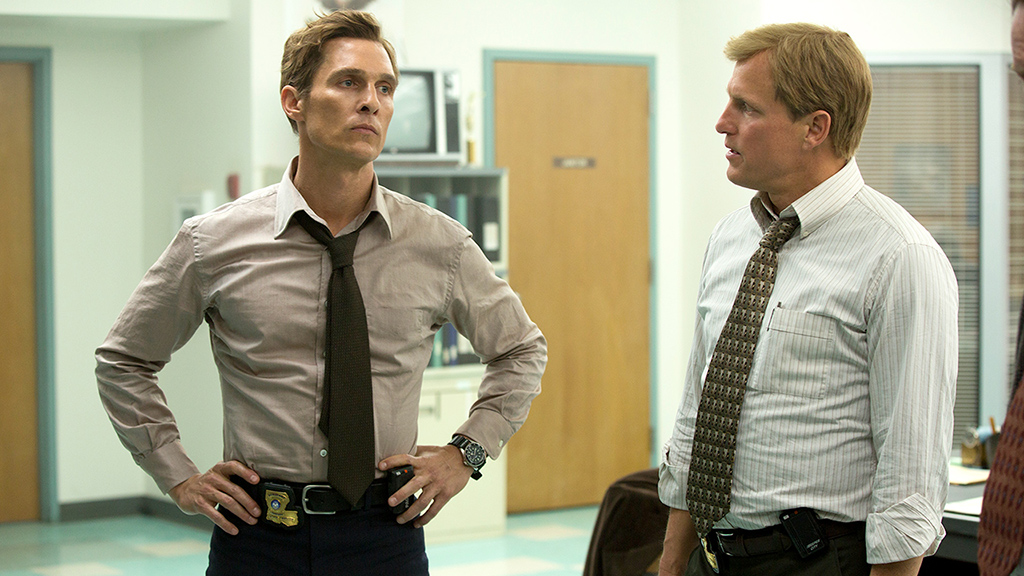
The series brought together the world of hard-boiled detective fiction, film noir, the ominous Southern Gothic tradition and cosmic horror. The latter influence included Robert W. Chambers’ 1895 collection The King in Yellow, whose mysterious motifs have kept True Detective fans busy ever since.
Rust Cohle’s pessimistic worldview also introduced philosophical and literary influences that had previously been rather unusual guests in an ordinary police investigation. Lieutenant Columbo never quoted Kierkegaard, as far as we can remember, and it probably would have been somewhat surprising if Magnum had started delivering Nietzschean paraphrases.
And yet, somehow, it all worked remarkably well.
As the investigation uncovered increasingly dark details, the characters were repeatedly forced to reinterpret what they thought they knew about the world, about themselves and about their own place within it. The story unfolded across several time periods, often through recollections that contradicted one another.
The viewer therefore became involved in the investigation as well, trying to work out what had really happened, who could be trusted and how the truth might be reconstructed from different perspectives. To do that, we first had to understand those perspectives – at least to some extent. This was not always a simple or comfortable process.
Nic Pizzolatto explained in a 2014 interview that, within the world of True Detective, everything that can be questioned is made up of stories. For Cohle, identity – the “self” we imagine to be permanent – is itself a story we tell about ourselves. Hart constructs a story about his own masculinity. During their interrogations, both men present narratives that change over time and are not always true.
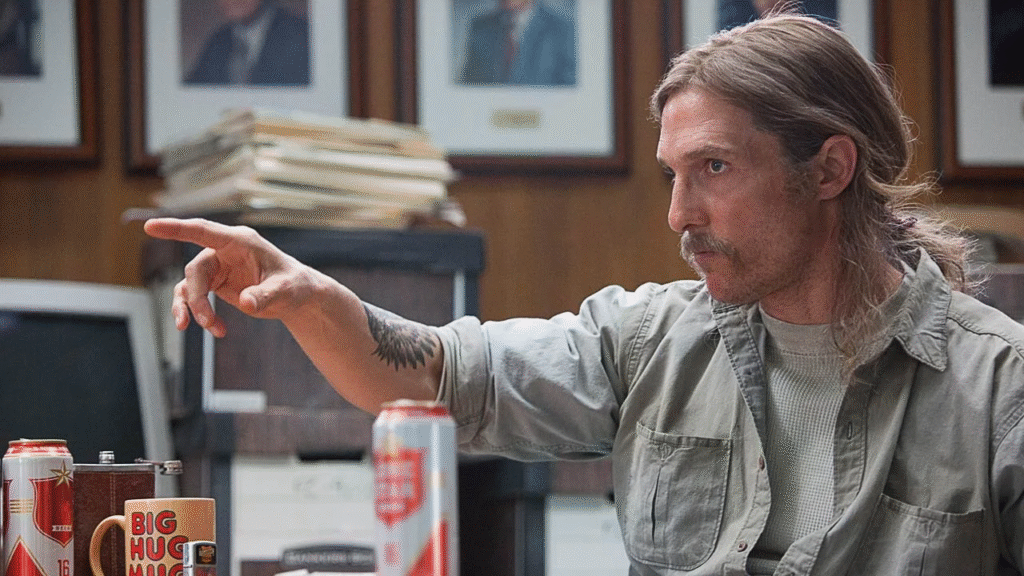
This is where the philosophy and the dramaturgy of the series connect. While the detectives try to reconstruct the truth from other people’s stories, the stories they tell themselves about who they are gradually fall apart and change as well.
All of this was accompanied by Fukunaga’s consistent, cinematic visual style, the slow pace, the distinctive atmosphere and two memorable central performances. The entire eight-episode season was created by the same writer-director pairing, which gave it an unusual degree of unity. True Detective became one of television’s defining examples of dark, character-driven crime drama, and remained a reference point for years afterwards.
What Keeps Returning from Season to Season?
True Detective was conceived as an anthology from the beginning, with each season introducing a new story, new characters and a new setting. Season 2 moved into the world of political and business corruption in California, starring Colin Farrell, Rachel McAdams and Vince Vaughn. Season 3 followed Mahershala Ali and Stephen Dorff through a decades-long case in the Ozarks, where memory and the passage of time became particularly important. Season 4 placed Jodie Foster and Kali Reis in the darkness of the Alaskan polar night.
The stories were different, but certain characteristics continued to connect them. The detectives themselves were usually damaged, contradictory and complicated figures whose personal histories mattered at least as much as the cases they were investigating. The locations were so distinctive that they almost became characters themselves: the swamps of Louisiana, the urban and industrial landscapes of California and the wooded Ozarks all helped define their respective seasons and lodged themselves deeply in viewers’ imaginations.
Behind the crimes, an entire network of social relationships usually emerged as well. As the investigation progressed, it gradually exposed the connections, power structures, past events, personal decisions and suppressed stories that had led to the crime.
If the crime itself was the tip of the iceberg, the individual seasons tried to show us the whole iceberg – along with the investigators uncovering, piece by piece, everything hidden beneath the surface.
If we had to name one thing that makes True Detective feel like True Detective, perhaps it would be this:
Through one specific case, it gives us a glimpse into the workings of an entire world.
Franchise or Not a Franchise?
Season 4 introduced a particularly interesting change. Night Country originally began as an independent story in the mind of Mexican filmmaker Issa López – and presumably on her computer as well. She had been developing the idea of a dark Arctic crime story when HBO approached her about True Detective. López realised that her concept could fit the series remarkably well: two complex central characters, an oppressive environment, a mysterious crime and phenomena that appear to be supernatural.
That is how True Detective: Night Country came into being.
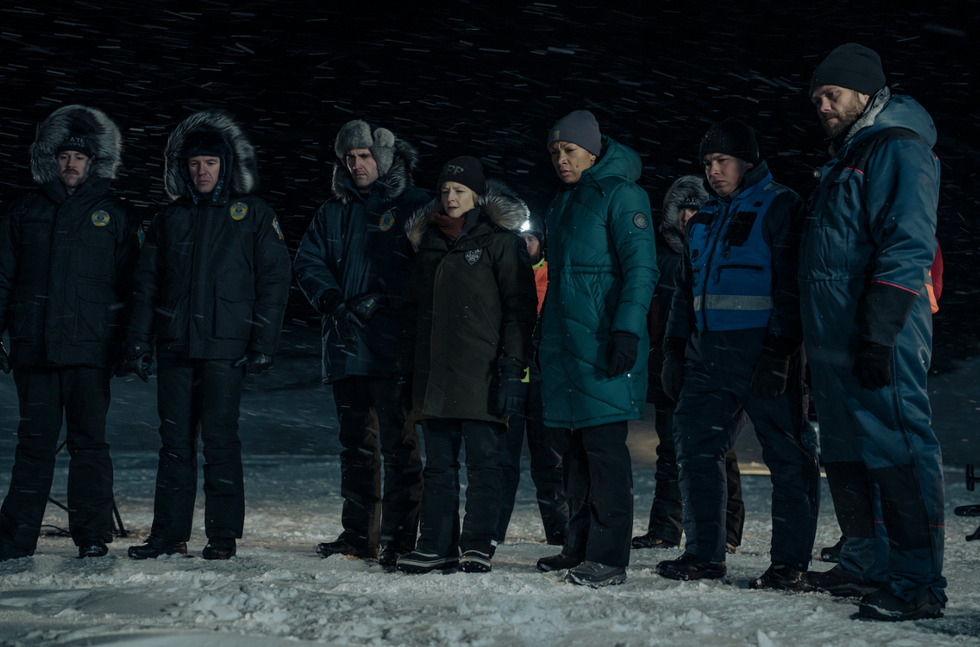
But the change went further than that. The first three seasons had emerged from Nic Pizzolatto’s creative vision. With Season 4, however, True Detective became something that could absorb independent stories created by other filmmakers. López herself has spoken about it as a franchise, comparing it to James Bond and Doctor Who, both of which periodically renew themselves with new central performers and creators.
The problem is that a successful franchise needs more than simply giving a new thing the same name as an older thing. Viewers reasonably expect that if they see the same title, they will recognise something of what made them care about the original in the first place. With James Bond or Doctor Who, that connection is obvious even when the lead actor or tone changes.
With True Detective, the task is considerably more difficult. There are no permanent characters, no recurring location, no franchise-specific gadgets or devices, and no single overarching story connecting every season. The common ground lies mainly in the style of storytelling, the atmosphere and the human and social world gradually revealed behind the investigation. Those are much less concrete anchors and can easily disappear if new creators move too far away from them.
Perhaps for exactly that reason, Night Country created more explicit links to the first season. The mysterious spiral symbol returned, connections to the Tuttle family appeared, and the Alaskan story also touched on Rust Cohle’s past. In this way, something resembling a loosely interconnected world began to emerge between stories that had previously seemed separate.
These connections are, of course, a double-edged sword. They can delight long-time fans, but recognisable references do not necessarily add much to the story by themselves. They can even feel forced if they exist only for their own sake, or simply to ensure that separate stories are somehow linked together.
So one of the most interesting challenges facing True Detective has become this: how can it preserve its own identity while allowing every new season to tell something different?
Two New Detectives Set Out
In Season 5, Issa López will have a second opportunity to shape the world of True Detective. The new story will take place around Jamaica Bay in New York, on the border between Brooklyn and Queens. With its marshes, waterfront, urban surroundings and natural areas, this is a rather unusual side of New York and could provide an interesting backdrop for another dark crime story.
Nicolas Cage will play Henry Logan, while Antonio Banderas will play Rai García. We know very little about the characters so far, but the casting alone is quite a combination. It will be interesting to see what kind of pair they become, what sort of characters they are given and what kind of chemistry develops between them – particularly in a series whose stories and atmosphere have always depended heavily on the relationship between its two central figures.
According to the information released so far, the new season may also connect to the world of Night Country through certain threads while still telling a self-contained story. The details remain secret. Production is scheduled to begin in 2027, and no premiere date has yet been announced.
And since we have already ventured into philosophical territory: True Detective is becoming a little like the Ship of Theseus. According to the story, the Athenians preserved the ship in which Theseus returned from Crete. As its wooden planks and other components decayed over time, however, they replaced them one by one. Eventually, every original part had been replaced. Was it still the same ship?
And by the same logic, what makes a story True Detective when almost everything that made up its first season has gradually been replaced?
Sources and Further Reading
HBO / HBOWatch: Pizzolatto/Fukunaga Talk TRUE DETECTIVE January 16, 2014.
Contemporary interviews with the creators about the origins of the first season, its literary background and the directing concept behind it.
HBOWatch – interviews
Nic Pizzolatto: True Detective – interview on Season 1 March 2014.
On Southern Gothic, weird fiction, Robert W. Chambers and the role of unreliable stories in the series.
Read the interview
The A.V. Club: True Detective’s new showrunner on shaking things up and why Jodie Foster is a “beast of an actor” 2024.
On the Arctic story that was originally conceived independently, and on the deliberate reuse and transformation of motifs from the first season.
The A.V. Club – interview
Creative Screenwriting: “A Different Supernatural, Different Big Questions, Different Characters & A Different Environment” – Issa López on True Detective: Night Country 2024.
On the franchise nature of the series, new creative approaches and the comparisons with James Bond and Doctor Who.
Creative Screenwriting – interview
Entertainment Weekly: Nicolas Cage and Antonio Banderas will officially headline True Detective season 5 October 16, 2026.
On the officially announced stars of Season 5, the creative team and the beginning of production.
Entertainment Weekly – full article
EFE: Antonio Banderas y Nicolas Cage protagonizarán la quinta temporada de ‘True Detective’
October 17, 2026.
On HBO’s announcement of the Season 5 cast and its Jamaica Bay, New York setting.
EFE – full article