Rumours are circulating about a possible Twin Peaks video game… but what would it take to make a truly great Twin Peaks adaptation?
Welcome to Twin Peaks
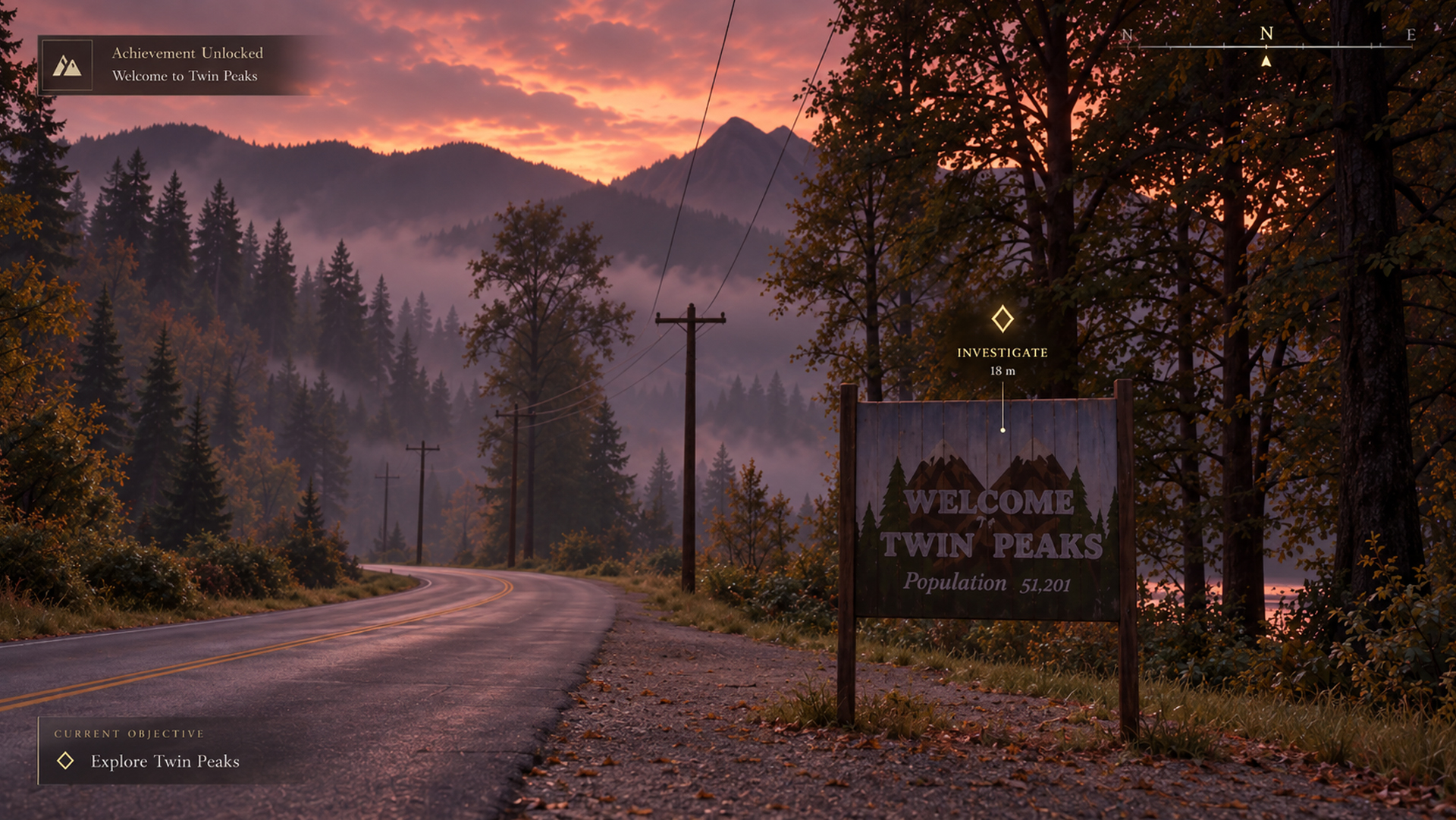
Somewhere in the depths of Steam (one of the world’s largest video game distribution platforms), there is an application that, for now, has no name…
We don’t know much about it. We don’t know who’s developing it, who’s publishing it, when it might be released, or whether it will ever be released at all.
All we know so far is that it has an achievement called “Welcome to Twin Peaks”, with a simple objective: “Reach the Double R Diner.”
And that’s where everything we know for certain comes to an end.
We have a real mystery on our hands…
In September 2026, a Steam data leak accidentally exposed achievements from several unreleased games, some of which had not even been announced. The Twin Peaks-related entry is listed under Steam App ID 3886550. The database still identifies it as an unknown application, with no developer, publisher, or official title attached.
In other words, someone may have been working on a Twin Peaks game.
Or maybe not.
The rumour gained further momentum when a fan claimed to have asked Sabrina S. Sutherland, producer of Twin Peaks: The Return and a former collaborator of David Lynch, about the possibility of a game. According to the fan, she replied: “There is a game that will be coming out eventually.”
The exchange has not been independently verified. And even if it really did happen, we still don’t know whether she was referring to the same project.
So, for now, let’s just say that someone, at some point, created a Steam achievement telling us to reach the Double R Diner.
Why?
That’s a mystery.
We reckon it’s for the pie.
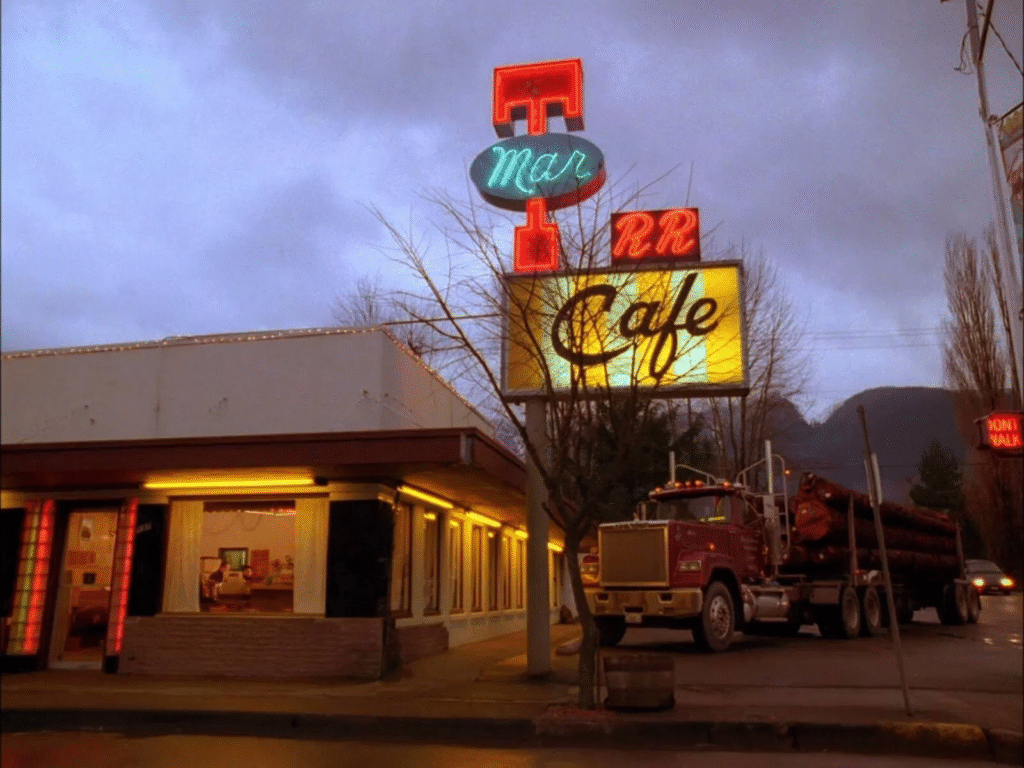
Incidentally, there’s another good question: is it even possible to make a good Twin Peaks video game?
It’s Been Done Before. Just Not Quite Like This
We’re not exactly venturing into uncharted territory here.
In 2018, the official Twin Peaks VR game was released, allowing players to explore locations including the Red Room, Glastonbury Grove, the Sheriff’s Department, and the glass-box room from the third season in virtual reality.
The game combined a supernatural adventure with puzzles and escape-room elements, with the official involvement of Showtime and David Lynch.
But it was more of a virtual Twin Peaks theme park than a fully fledged, narrative-driven video game.
Fans have tried to fill the gap.
One of the most impressive attempts was Twin Peaks: Into the Night, which looked as though someone had actually made a PlayStation game based on the series back in the late 1990s.
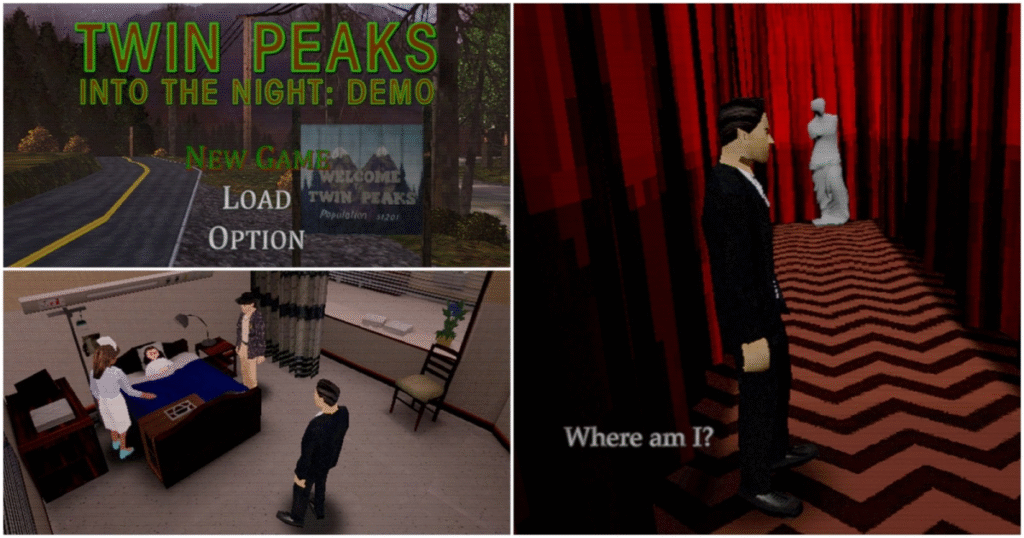
A playable demo of the project was available for almost two years, until Paramount issued a copyright notice in 2025, after which itch.io removed it.
When the Steam rumour surfaced, the creators of Into the Night confirmed that they had nothing to do with it.
So, in more than thirty years, one of television’s most iconic cult series has never received a major video game adaptation comparable to those of Star Wars, Batman, or even South Park.
The Twin Peaks Games That Aren’t Twin Peaks Games
But even though there hasn’t been a major Twin Peaks game, it’s fair to say that certain video games would look very different without the series.
The most obvious example is Alan Wake.
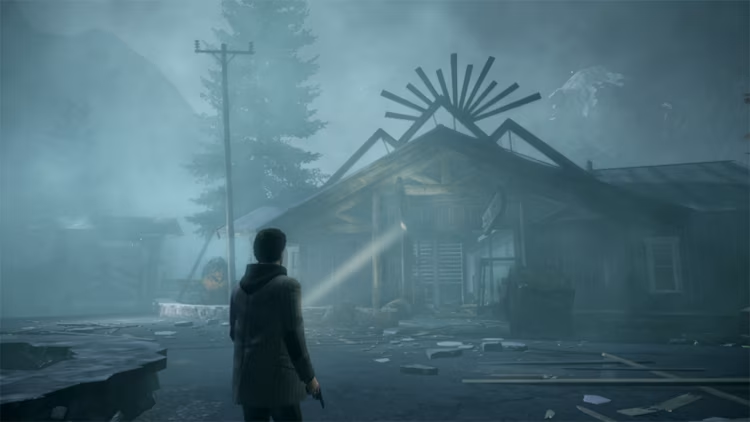
Creative director Sam Lake has never made a secret of the inspiration. Even before the first game was released, he said that Twin Peaks was one of the influences behind Bright Falls, the small town where the game takes place.
But it’s not simply a matter of having owls lurking around every corner, waiting for someone to start speaking backwards. The connection runs a little deeper.
There’s a small town that initially seems ordinary and familiar, but gradually reveals itself to operate according to an entirely different set of rules.
In a different form, this was also one of the starting points for Life is Strange.
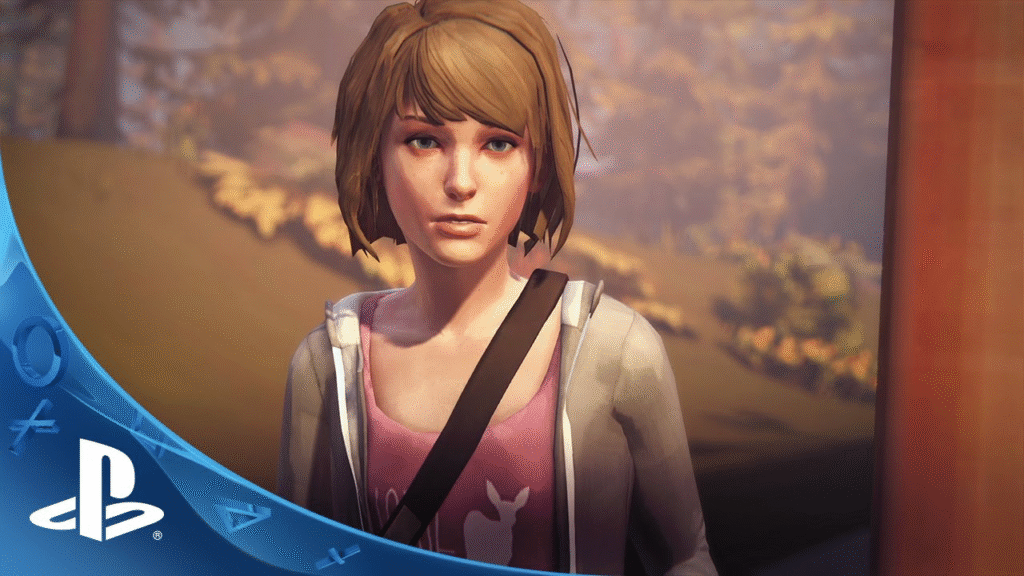
During development, the game’s co-director Michel Koch spoke about the influence of Twin Peaks: the isolated small town where everyone knows everyone else, the secrets hidden in the surrounding wilderness, and the way seemingly familiar character types gradually reveal themselves to be far more complex people.
But there’s an even more surprising example.
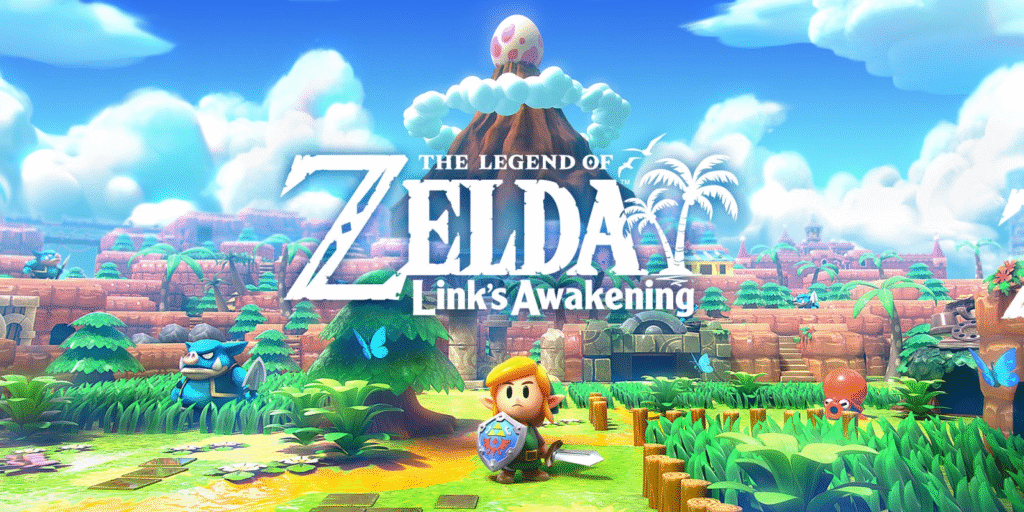
When developing The Legend of Zelda: Link’s Awakening, Takashi Tezuka specifically wanted to create a Twin Peaks-like world.
A relatively small area, with relatively few characters, who would nevertheless be distinctive, strange, and thoroughly suspicious.
Years later, in one of Nintendo’s own developer interviews, Tezuka laughingly recalled his instructions: make the characters as suspicious as the people in Twin Peaks!
And that brings us to something that might also be useful to the creators of a future official Twin Peaks game (if they happen to read Jammer):
Twin Peaks is not simply a mood or a genre. It’s much more like a way of making a world work.
A Red Curtain Is Not a Game Mechanic
Imitating Twin Peaks is easy.
You need an American small town that players can explore and get to know. Mountains, pine trees, fog. A murder. A quirky police officer or FBI agent, lots of coffee, a little pie. An owl or two. A few people speaking in riddles. Strange dreams.
And, of course, a generous supply of red curtains.
Put all that together, and you’ll very quickly end up with something that looks like Twin Peaks.
Except that’s not what makes Twin Peaks work.
One of the series’ tricks is that it treats the most mundane and the most inexplicable events with almost exactly the same degree of naturalness.
A slice of pie, a love triangle, a business dispute, and a metaphysical nightmare are all part of the same world.
And then there’s the small town itself.
On one level, the town serves as the backdrop for all these ordinary and otherworldly events.
But it is also a system of interconnected people.
When something happens to one person, it affects someone else. The characters have families, acquaintances, jobs, secrets, lovers, and enemies.
But mostly secrets.
In the series, the investigation into Laura Palmer’s death is not merely a murder mystery. It’s also an excuse for us to gradually take the town apart alongside Agent Cooper and see what’s lurking beneath the surface.

And that’s where things get really interesting from a video game perspective.
Don’t Solve It Too Quickly
The basic structure of a traditional detective game is relatively straightforward.
We find clues, interview witnesses, connect the pieces of information, and draw the correct conclusion.
We solve the case.
Science. Art.
But things don’t work quite so neatly in Twin Peaks.
Information doesn’t necessarily come in the form of data. We can’t even be certain that it’s real. Connections don’t always follow logic.
Everything is just a little more confusing than we’re used to.
Cooper dreams, makes associations, and experiments with strange methods. He pays attention to things that other detectives might dismiss as irrelevant because they aren’t factual.
Some signs turn out to be important later. Others perhaps never do.
The viewer is constantly trying to find a pattern in all of this, while the series occasionally makes us question whether there is even a single underlying system in which anything is connected to anything else.
A conventional “collect the evidence, then pick the murderer” game could easily turn all this into a detective story wearing a Twin Peaks costume.
Perhaps it would be much more interesting to create a game in which attention itself is what matters.
Where we go, and when. Who we talk to. Which strange details we consider important. What connections we notice (or create) between seemingly unrelated events…
And whether we’re willing to accept that we won’t get an answer to everything.
The world of such a game could be quite small.
The Double R Diner, the Sheriff’s Department, the Great Northern Hotel, the forest. A few houses, a gas station.
Familiar roads connecting them.
And people who live, work, talk, and meet one another in these places.
We could follow them around and discover that the gas station attendant eats doughnuts every Tuesday, that the waitress is in love with the deputy sheriff but will never tell him, or that the high school principal’s little daughter is terrified of owls.
The strange woman living on the edge of the forest talks to foxes.
In a game like this, Twin Peaks itself could be the central gameplay mechanic.
We would explore the town to discover how the place works: its people, its relationships, and the connections between them.
But, of course, every now and then, something would happen that doesn’t fit into anything we’ve learned.
The game would give us the illusion that we’re beginning to understand how its world works.
But it would be far too strange for us ever to understand it completely…
…And Then We Head for the Double R
Of course, for now, all of this is just speculation. A thought experiment. We don’t (yet) know what the reality will look like.
We don’t know who’s making the project lurking somewhere in Steam’s system, or whether it really will be an official Twin Peaks game.
We don’t know whether we’ll play as Cooper or a new character, or whether there will even be an investigation.
Or whether there will even be a game.
Or whether there will be anything at all.
Anything.
All we know is one specific objective:
“Reach the Double R Diner.”
If the game really does come out one day, getting there probably won’t be difficult.
The much harder part will be making us feel, by the time we walk through the door, that something here is terribly, terribly wrong.