Worldinterflow, in Brief
Worldinterflow is a public research and science communication project exploring how information emerges, moves, and changes as it passes through people, communities, creative works, and eras. We want to understand how these currents of information work, and how we, as human beings, relate to them.
We begin with concrete stories, often familiar and sometimes quite remarkable, tracing how they unfold and what effects they have. We distinguish facts from conclusions, assumptions, and metaphors, and actively look for counterexamples that challenge the picture taking shape. We then try to draw conclusions from our research, hoping to gain insights that may prove useful.
We are not offering a ready-made explanation of the world. Instead, we explore what happens when we look at the entire world—culture, social influences, historical events, economic processes, the history of thought, and everything else—in terms of currents of information.
Recent examples
The easiest way to explore Worldinterflow is through stories. Here are some of our latest real-world examples.
-
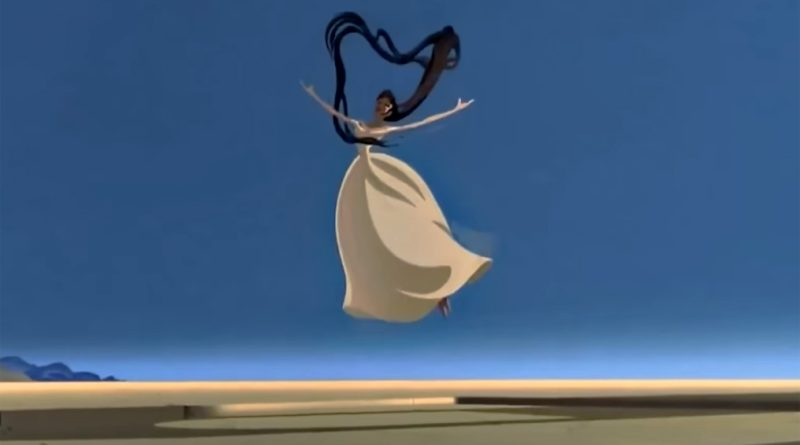
Destino – Dalí, Disney és a szétszóródott képzelet
Dalí és Disney félbemaradt filmje évtizedekre szétszóródott rajzokba, emlékekbe és archívumokba, majd új alkotók kezében született újjá.
-
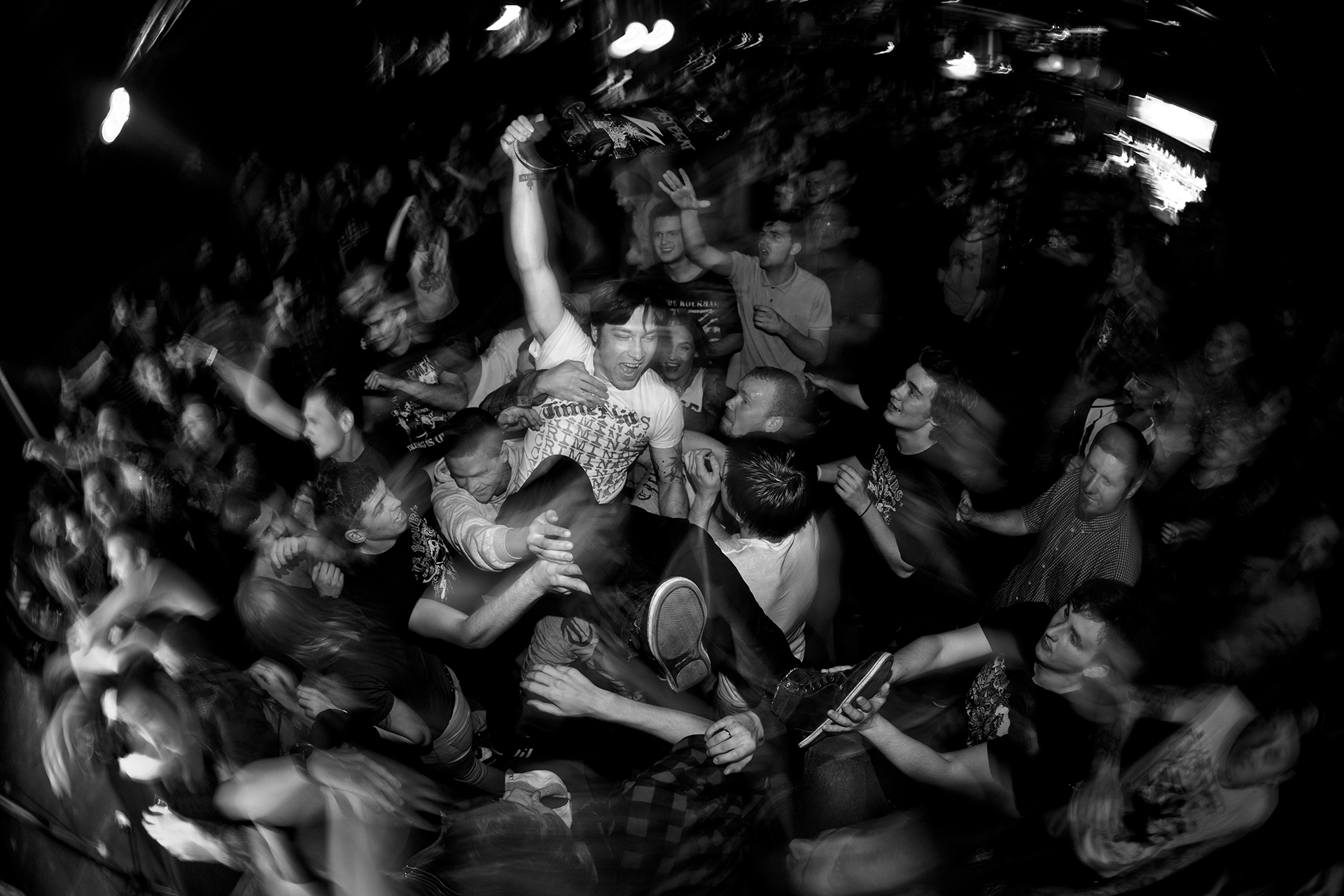
A pogo az nem egy tánc – a mosh pit jelenségről
A mosh pit kívülről kaotikus tömegverekedésnek tűnhet, valójában azonban saját szabályok szerint működő közösségi tér. Mi történik, amikor az emberek ideiglenesen egy másik szabályrendbe lépnek át?
-
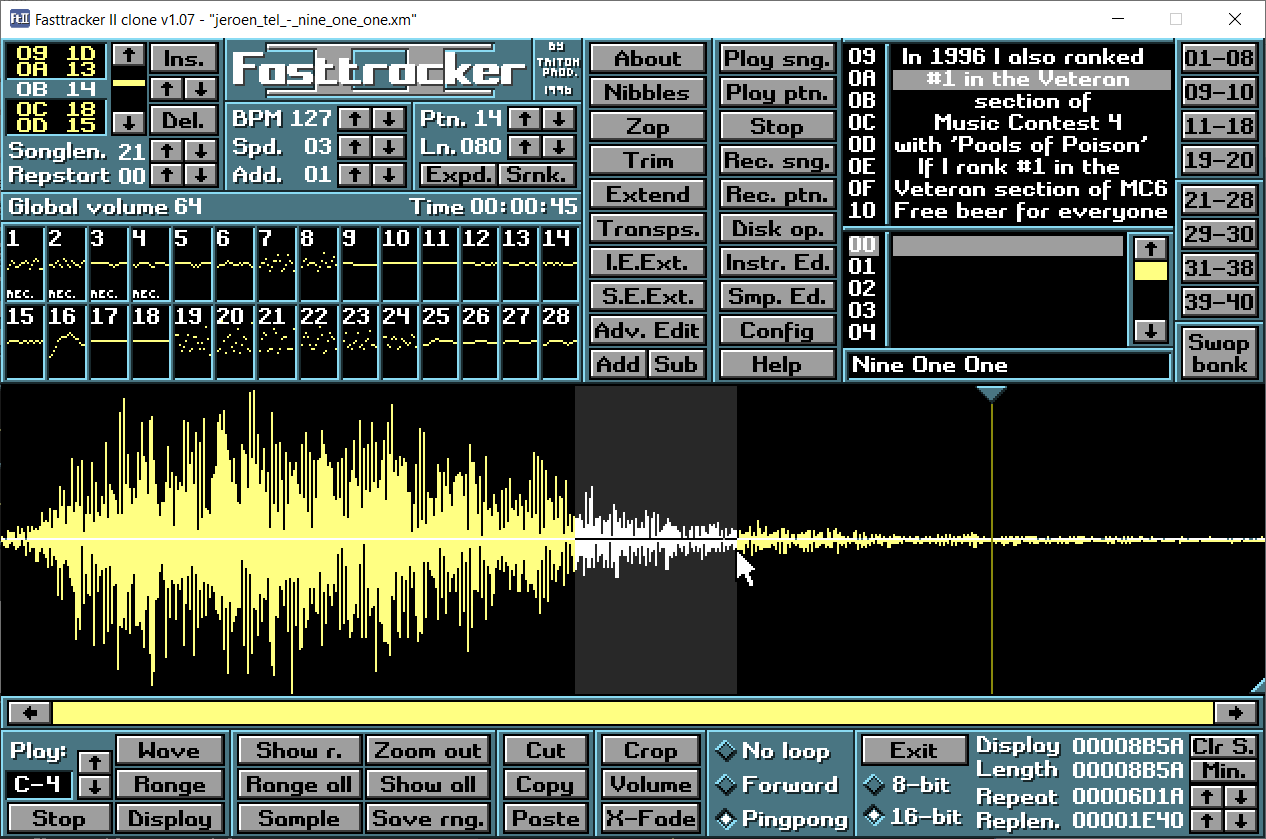
Újrahasznosított zenék – Csapj fel te is sample-nyomozónak!
Lehet-e eredeti, ha valami újrahasznosított? Honnan származnak híres számok hangmintái? És hogyan áramlik a muzsika korszakokon át?
Follow the Flow!
We’ll send you the latest Worldinterflow stories, insights, and questions — including the counterexamples that challenged our thinking or led us in unexpected new directions.
Privacy Policy (HUN)
Worldinterflow, in Detail
What happens to information as it moves through the world?
Worldinterflow.
What connects a melody that lives on through generations, a story that changes over time, the birth of a scientific theory, the spread of a new word, the evolution of a religion, the return of a fashion trend, or even the processes at work in an economy? At first glance, perhaps nothing. These phenomena concern different things, unfold on different scales, and are generally studied using entirely different methods.
But if we look at them not as isolated phenomena, but as processes unfolding over time, certain similarities may begin to emerge. Something comes into being, or becomes recognizable. Others encounter it. It passes through people, communities, and various channels. Along the way, it changes and connects with other things. Some circumstances amplify it, while others stand in its way. It may branch off, merge with other processes, fade into the background, disappear from view, and later resurface in a new form. And while it affects those who encounter it, they, in turn, affect it.
We call this interconnected, constantly changing movement Worldinterflow.
Worldinterflow is also the name of our public research and inquiry project, through which we hope to gain a better understanding of this phenomenon. We are not offering a definitive explanation of the world. In fact, we are not preaching anything at all. Nor do we claim to know what a musical motif, a historical transformation, and an economic system might have in common.
That is precisely what we want to find out: whether genuine similarities exist between them, how far those similarities extend, and where comparison becomes mere metaphor.
In short, we have noticed that something keeps passing through people, creative works, communities, and eras. This project is about paying closer attention to what happens to it along the way.
We didn’t set out to explain the world
This whole thing didn’t begin with us deciding to figure out how information moves, unite the sciences, settle the question of consciousness, and, while we were at it, explain how the entire world works in a simple way that everyone could understand perfectly. We were simply exploring all sorts of interesting phenomena. After a while, though, we began noticing similar patterns more and more often. Something new emerged from inherited elements. An idea lived on through other people. A community created something that none of its members had planned in its entirety. A form thought to have disappeared came back to life in a new setting. Elsewhere, a shared process fell apart because the connections that had kept it going were lost.
Perhaps we are merely using similar words to describe fundamentally different things. Perhaps, once we notice a pattern, we become inclined to see it everywhere. But it is also possible that these processes share genuine similarities that can be investigated.
For now, we have committed ourselves to none of these possibilities. The patterns appeared often enough, however, for us to decide that they were worth looking into.
What does information do?
We often talk about information as though it were some kind of package. Someone comes up with an idea, passes it on to someone else, and that person receives it. As if the same intact content simply moved from one place to another. But the original idea rarely comes out of nowhere. It is built from language, memories, previous experiences, concepts received from others, stories, and patterns. And when someone shares that idea with another person, the recipient understands—or interprets—it through their own memories, knowledge, mood, and circumstances. They may find a different detail important, shift the emphasis, or connect the idea to something new.
If they pass it on later, what continues its journey is no longer exactly the same.
Oh, and the information doesn’t simply vanish without a trace from the person who shared it in the first place. Although passing it on may change the information in their own mind, too.
This is not a flaw in the system. It seems that transformation itself is part of how the system works, both at the level of the individual and on much larger scales. A melody can be given a new arrangement. An old story may mean something different in another era. An image can evoke new emotions when it reaches a new audience. A word may begin as a joke, become part of a community’s language, and eventually influence how members of that community think. Information, then, becomes connected, selected, compressed, transformed, enriched, copied, and reinterpreted. It produces effects and leaves traces. It doesn’t just travel.
In Worldinterflow, our primary questions are therefore what information does and how it does it.
Where does it originate? Where does it go? What helps it move forward, and what stands in its way? How does it change? Does information even need to move in order to remain information? What happens when its movement slows down or stops? And, more importantly, what does it change around itself?
More importantly still: are there general principles that can describe this enormous flow of information? And while we’re at it, is there any point to this whole investigation?
Let us assume that everything is information
One of the starting points of Worldinterflow is the central assumption in Balázs Török-Szabó’s work A teoretika (The Theoretics):
Let us assume that everything is information.
For now, we use this as a perspective: a door we open to see what connections might become visible on the other side.
We are not separately examining what the claim that “everything is information” might mean in the natural sciences, information theory, or even ontology. At least not yet. We hope others will take care of that for us. Instead, much like the framework developed in A teoretika, we treat it as an assumption and explore what follows if we suppose it to be true.
A teoretika is an anatomy of consciousness that examines how the individual functions. Within this framework, the scope of a person’s attention influences how they interact with information: what they notice, what they allow to pass on, what they retain, and what they transform—and on what basis.
(Incidentally, within this line of thought, the individual is also information. If everything is information, we are no exception.)
So the individual, who is themselves information, encounters and interacts with other information. The model developed in A teoretika explores how this interaction takes place. We use this model, too, while asking further questions. For example, what happens when an information process passes through a human being? What changes when several people participate in the process at once? How do their different intentions interact? How does a system much larger than the individual—such as the economy, science, technology, or an artistic discipline—affect that person? And how can the individual, in turn, influence the larger system?
The assumption that “everything is information” is therefore not the conclusion of our inquiry. It is where we begin.
Humans as active participants in shaping the process
From this perspective, a human being is simultaneously a receiver, a transformer, and a medium through which information is passed on.
Information does not simply flow through us as though we were pipelines. We pay attention to it—or fail to notice it altogether. We accept or reject it. We misunderstand it, remember it, forget it, connect it to other memories, attach emotions to it, use it for a new purpose, or deliberately reshape it. In other words, we are part of the very process that determines what gets passed on, and how.
Moreover, information does not merely change us. Having encountered it, we may make different decisions, pay attention to different things, create something new, or change our surroundings. These changes may, in turn, become new information for others.
The process thus creates feedback loops: information shapes people, people shape information, and the transformed information begins to exert its influence once again.
The channel shapes the information, too
The path information takes also depends on the medium through which it moves. Human beings can themselves be considered a medium, but the process depends on more than the people involved. A story spreads differently when told aloud, published in a book, presented in a film, or condensed into a video lasting just a few seconds. A news story behaves differently in a printed newspaper, a private conversation, or on a platform that measures every reaction and uses those measurements to decide what to show to even more people.
The channel is not necessarily neutral. It can speed things up, slow them down, and filter what passes through. It may emphasize certain characteristics while obscuring others. It may favor content that is shorter, more visually striking, more emotional, or easier to share.
Meanwhile, the channel itself changes under the influence of those who use it. A human being is also a channel capable of transforming information. But a language, a genre, an education system, a publishing house, a search engine, a social media platform, or a political institution can also serve as a channel.
This is why we will ask not only what is moving, but also what it moves through—and what the journey adds to whatever eventually arrives.
Consciousness in motion
Consciousness remains one of science’s greatest unsolved mysteries. Many researchers are trying to understand where it comes from, how it works, or even what it actually is. As ordinary mortals, we tend to think of consciousness as something that belongs to the individual. Our memories, thoughts, feelings, and ideas exist within us, and somewhere in the entirety of these experiences we find what we call our own consciousness.
Yet much of what we use to think has come to us from other people. From the moment we are born, we receive language, concepts, stories, rules, questions, and possible answers. Other people’s experiences reach us through words, tales, books, images, music, films, conversations, customs, institutions, and countless other currents of information. We store these things, connect them, rearrange them, develop them further, and pass them on. Often without even noticing.
This raises an intriguing question: should every process associated with consciousness necessarily be examined exclusively within the individual?
Of course, we are hardly the first people to wonder about this. There are plenty of theories proposing some kind of vast, invisible, shared consciousness, and several different versions of that idea exist. We do not want to commit ourselves either to or against any of these theories. We would rather ask questions.
What happens to a thought when it reaches another person? (Is there such a thing as a single thought existing somewhere?)
Where does a creator’s vision continue when other people begin working on it? (For example, when a director takes a screenplay and begins turning it into a film.)
Where does a genre “exist” if no one has ever written down all its rules, yet countless creators and audiences can recognize it across different media? (Cyberpunk, for example.)
Where is a community’s knowledge located if no single member possesses all of it?
Are there observable processes associated with consciousness that become apparent only through relationships between people, through languages, creative works, and shared systems?
These questions may lead to entirely different answers. Some may turn out to be poorly formulated. Others may prove to be of little value and lead nowhere. We will ask them anyway, and set about looking for answers.
How does anything new come into being?
If our thoughts are built from existing information, influences, and experiences, sooner or later we arrive at the question of novelty.
After all, it is reasonable to ask where all of this came from in the first place. Can genuinely new information emerge from nothing? Or is novelty always a new connection between existing elements? If every transformation begins with a previous state, what does originality actually mean? Can something still be new if we can recognize its sources?
Perhaps novelty does not necessarily mean the appearance of new building blocks. What is new might be the connection, the arrangement, the context, the meaning, or the effect. The same motif, appearing in another era and another system, may set an entirely different process in motion.
But perhaps entirely new information really does appear from time to time within the great flow. Who knows? We do not want to decide this in advance, either. We will investigate creation, originality, imitation, reuse, repetition, variation—and perhaps even the question of creation in its most fundamental sense.
We’re feeling brave.
It may also be interesting to examine what happens when the movement of information slows down. Is it preserved? Does it die out? Does it lie dormant? And when it resurfaces later, does the same process continue, or does something different emerge from it? Can information disappear forever?
And where do erased words go…?
One person, a few people, a great many people
A single person can stop an idea in its tracks, carry it forward, or change the course it takes.
With a few people, mutual interaction becomes possible. One person’s idea changes another’s, which then influences the first person’s thinking in return. Feedback loops emerge, and the process may take a direction that none of the participants anticipated.
When a great many people interact, they can form even more complex systems. Fashions, shared languages, norms, movements, panics, traditions, and collective knowledge may emerge. Structures can arise that no one deliberately designed, and that no individual participant can fully understand or control.
Ten people who regularly talk to one another do not form the same kind of system as ten thousand people watching the same television program. A creative team in which everyone can respond to everyone else’s work functions differently from a social media platform where an algorithm also helps determine who sees what. A crowd in which everyone watches the behavior of those immediately around them is different from a network connecting many smaller communities.
An information process, then, may be shaped not only by the characteristics of its participants, but also by the relationships between them.
The number of participants matters. So does who is connected to whom, how quickly information travels and which routes it follows, whether there is central coordination, whether feedback loops operate, who has the ability to amplify or conceal information, and how much of the overall system its participants can see.
This is where network science and the study of complex systems may become particularly important.
Currents running alongside one another
Cultural processes are influenced by technology, the economy, politics, the social environment, and public sentiment. Technological development, meanwhile, is shaped by economic interests, cultural needs, scientific discoveries, and human decisions. The economy, too, is influenced by trust, fear, storytelling, law, technology, and countless other processes.
In a more narrowly focused investigation, we might treat these as external influences.
If we are tracing the evolution of an artistic movement, for example, we may treat the economy as an external condition in our model. But when we look at the bigger picture, perhaps these influences are not external at all. Perhaps what we are seeing is currents interacting with one another. Economic, historical, cultural, technological, and political processes themselves carry information. They move through people and systems, continually shaping one another along the way.
In the picture we are examining, everything is interconnected—this is what we are calling Worldinterflow here.
But that does not mean every connection is equally important, or that everything can be directly connected to everything else.
So, to make individual currents easier to understand, we may examine them separately before exploring how they fit into the larger whole.
What drives the flow?
If something is flowing, sooner or later we have to ask what keeps it moving. Why does one idea spread rapidly while another disappears? What gives new life to something that has almost been forgotten? What keeps a community functioning? Why does one current gain strength and then weaken?
The word energy tends to come up fairly quickly in discussions like these. We speak of creative energy, the energy of a community, the power of an idea, or the momentum of a movement. These are understandable and often useful images. Physical energy, however, is a precisely defined, measurable quantity in the natural sciences. We cannot automatically equate the movement of information, or its capacity to move, with energy—particularly after adopting an assumption such as “everything is information”! Nor can we rule out with complete certainty the possibility that some kind of energy-like driving force may also be involved.
For now, therefore, we will leave open the question of whether energy can be anything more than an illustrative metaphor in Worldinterflow.
Perhaps these processes are driven by attention, time, work, money, technical capacity, interests, desire, fear, love, or other resources and motivations. Perhaps these are themselves interconnected information processes. And perhaps all of them can, in some sense, be understood in terms of energy.
Similarly, we can examine how currents change according to various parameters. Do some currents grow stronger, reach a peak, then weaken or transform? Can we identify cycles, recurring patterns, and overlapping waves? But we cannot begin by assuming that every process is necessarily wave-like, or that the same law applies to a fashion trend, a religion, and an economic system. A metaphor is useful when it helps us ask a more precise question. If it explains everything, it probably doesn’t really explain anything.
How do we work?
We begin with concrete, verifiable, and preferably intriguing stories. We might trace the journey of a musical motif, the transformation of a science fiction idea, the continued influence of a philosophical concept, different versions of a historical narrative, the spread of a technology, or the meeting of two seemingly unrelated processes.
In each case, we ask a similar set of questions:
- What emerged, and from what?
- What moves or gets passed on?
- Who or what participates in the process?
- Through which channels does it pass?
- How do the journey, the medium, and human interpretation change it?
- What speeds it up, slows it down, strengthens it, or weakens it?
- Where does it branch off, and where does it connect with other processes?
- Which of its characteristics are unique, and which might be more general?
- Can we identify similar patterns in other fields?
- What does our model explain, and where are its limitations?
- Where does human decision-making enter the process?
- Can the knowledge gained in this way be put to practical use?
We will gradually try to build a bigger picture from individual examples.
We are not setting out to prove a predetermined conclusion. If an appealing idea fails to withstand scrutiny through sources, comparisons, or counterexamples, we will consider that an important result, too.
What does scientific inquiry mean in this context?
Worldinterflow does not define itself as a new scientific discipline or a fully developed theory. It is a cross-disciplinary research and science communication project—which is quite a grand way of saying that we want to bring together knowledge already developed in different fields and examine the connections between them.
Our questions relate to several established areas of research. Cultural evolution, for example, studies how ideas, customs, and technologies are transmitted and transformed among people. Network science can help us understand the connections and influential participants through which they spread. The study of complex systems looks for similar patterns of organization across different fields. We may also draw on the history of philosophy, research into the diffusion of innovations, the philosophy of information, systems theory, cognitive science, and other disciplines. Naturally, we can look for connections with the natural sciences as well—but only where those connections can be precisely formulated and tested.
Just because two fields use the same words does not necessarily mean they are talking about the same thing. In our work, we therefore aim to distinguish clearly between verifiable facts, source-based observations, interpretations, logical conclusions, analogies, testable hypotheses, speculation, and illustrative metaphors. We will actively look for exceptions and phenomena that do not fit the emerging picture. We do not assume in advance that every process follows the same laws. That is precisely what we want to investigate: whether such general principles exist, what they might be if they do, and if they don’t… Well, then they don’t.
Our goal is not to explain the entire world. Although, of course, we’re not entirely ruling that out either.
What are we setting out to achieve?
It would be easy to write that we are going to uncover the dynamics of information flow, unite all the sciences, solve the problem of consciousness, and then present our findings to humanity in an accessible form, making everyone wiser and more cooperative in no time. (It really was easy to write that.)
In reality, we do not know where this investigation will lead us. Perhaps we will discover a few relationships that prove useful across several fields. Perhaps we will identify several interconnected ways in which different systems operate. Perhaps some of the similarities we have noticed will turn out to be merely superficial. Or perhaps all we will find is an interesting perspective from which we can ask worthwhile questions and tell thought-provoking stories. We would be satisfied with that last outcome, too.
Worldinterflow will have served a purpose even if it simply helps us see the processes we participate in every day from a broader perspective. If we understand better how an idea spreads, perhaps we can make more conscious decisions about what we pass on. If we recognize how the channel shapes the message, we may become more aware of the influence our surroundings have on us. If we understand the feedback loops that emerge within groups, we may find it easier to recognize when we are being swept up in a process.
And if we come to see our own thoughts as momentary states within much longer histories, perhaps we will begin to relate differently to quite a few things: originality, disagreements, ourselves, one another, and the world.
An open workshop
Worldinterflow is more than a collection of future articles and conclusions. It is an open workshop for research and inquiry. The bigger picture will probably emerge as we go. We will share examples, sources, possible connections, doubts, and dead ends along the way. We do not want to publish only the results. We also want to make it possible to follow how we arrived at them. We welcome counterexamples, corrections, related research, and new directions for investigation.
It is particularly valuable when someone can point out where a claim is too broad, where we have confused a metaphor with an explanation, which important factors we have overlooked, which scientific field has already investigated a particular phenomenon, or which example contradicts an emerging idea.
We want to ask questions that reality can actually answer.
Join the research
Do you know of a particularly interesting current of information? Have you found a counterexample, an inaccuracy, or a relevant study? Send it our way. Let’s investigate together!
Do you think Worldinterflow is worth exploring? You can help us continue the research with a one-time contribution of any amount you choose.
Contributions are voluntary and do not entitle contributors to anything in return. Payments are processed through Donably via Barion.
This text is also part of what it describes
There is one more important detail: this “foundational document” is itself part of an information process. In other words, what we are investigating is happening right now. And it continues to happen as we investigate it.
We are bringing together earlier thoughts, concepts, experiences, and questions. We emphasize certain connections while setting others aside for now. We are looking for a form that is understandable, open to further thought, and flexible enough for others to become part of the process.
Style is not neutral, either. A dry, scientific definition, an impassioned manifesto, and a curious text written in a human voice all work differently. The form influences how many people read the text, what mood they are in when they encounter it, and whether they want to challenge it, develop it further, transform it, or pass it on.
While we investigate the journey of information, we are also shaping that journey ourselves. And when someone reads this text, they become part of the process, too. They may find a connection we have overlooked. They may recognize a mistake. They may know of a study or a counterexample that sends our thinking in a different direction. They may pass something from the text on to others, or put it into their own words. Or they may simply forget it.
This is why we are not announcing a finished theory. We are simply opening up an inquiry.
For now, we do not know whether we are observing different manifestations of a single overarching process or partially similar patterns across many distinct systems. We do not know whether Worldinterflow will eventually become a theory, a method, a perspective, a collaborative research workshop, or some combination of these. Or whether it will become anything at all.
What we already consider likely, however, is that nothing exists entirely in isolation. Thoughts, forms, stories, beliefs, insights, and decisions pass from one person to another, from one system to the next, and from one era to another. Along the way, they change, create connections, and influence those who carry them forward.
Something is always flowing onward.