Imagine living in a walled settlement somewhere in the world, completely cut off from everything else. Beyond the walls lie the remains of a dead civilisation, and at night bloodthirsty creatures roam outside – creatures you definitely would not want to meet. The settlement is protected by enormous floodlights that have to stay on every night. If they fail, the consequences could be fatal. It could mean the end of the entire community.
And yet every morning, the Sun still comes up. People go to work, raise children, make friends, fall in love, argue and make up again. Someone has to keep the electricity running; someone else has to make sure there is enough food. There are rules, customs and celebrations – and, naturally, there are also people who are unhappy with the way things are.
The world as we knew it ended a long time ago. Life, however, has continued ever since.
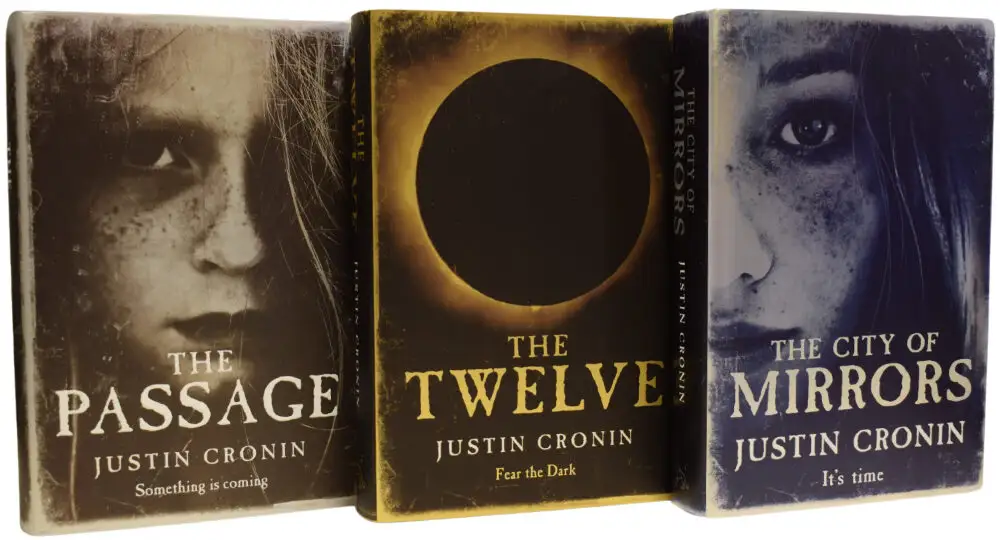
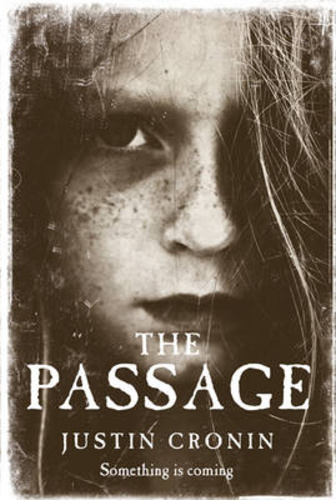
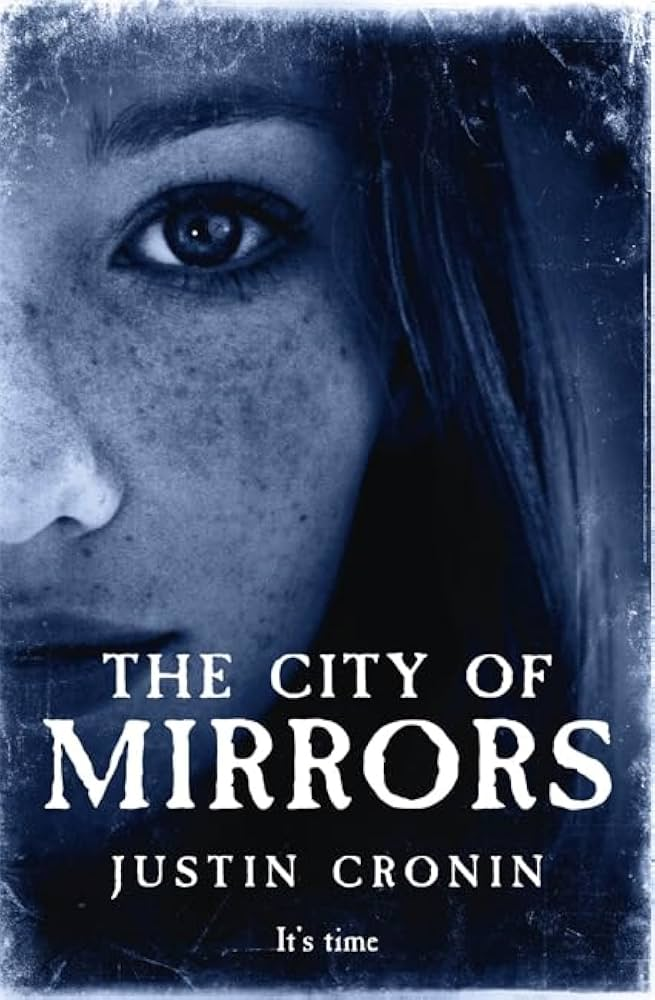
Perhaps this is one of the strangest attractions of Justin Cronin’s The Passage trilogy. The three novels – The Passage (2010), The Twelve (2012) and The City of Mirrors (2016) – take the reader into a post-apocalyptic world inhabited by vampire-like monsters. But anyone who truly immerses themselves in it will find much more than an ordinary survival story.
Vampires, but a Little Different
The story begins with a scientific experiment that goes catastrophically wrong. The result is an infection that transforms people into extraordinarily powerful, bloodthirsty creatures that avoid the light. Civilisation collapses, and the survivors are forced to adapt to a radically changed – and not remotely brave – new world.
If that sounds familiar, it is not entirely a coincidence. Cronin’s monsters emerge from the centuries-old cultural tradition of the vampire, even though he transforms them considerably. There are no aristocratic counts, coffins or castles, and no sparkling skin. Supernatural origins are replaced by a biological explanation: here, the vampire is the terrible consequence of a scientific experiment. And because the condition spreads through infection, another important question becomes part of the story: where did it come from, who were the first, and who was patient zero?
(This fits rather nicely into the long cultural process in which the figure of the vampire has repeatedly transformed itself. From the returning dead of folk tradition through the elegant bloodsuckers of literature to the creatures of modern films and television series, the vampire has travelled a very long way. We explored this in more detail in our Worldinterflow article The Vampire’s Journey – How the Bloodsucker Changed Over the Centuries, which we think turned out rather interesting.)
Cronin’s version, however, becomes most interesting when these creatures turn out to be only one part of a much larger story. The nights may be full of monsters, but most of human life is still about humans.
A Hundred Years Later
One of the most surprising moves in The Passage is that, at a certain point, the story jumps forward by almost a century. We spend a long time with the beginning of the outbreak, following people’s lives, decisions and tragedies while destruction gradually forces its way into the world. But we do not remain there. We move forward to a time when all of this has already become history.
The world we knew has disappeared. Most of the people we followed are long dead, and new communities have formed among the remains of civilisation, trying to adapt to the new conditions – and trying both to live and to survive.
The shift changes the experience of reading the novel completely. Suddenly we find ourselves in a society whose members do not know our world at all. For them, the collapse is a story from the distant past, while what we would consider ordinary everyday life belongs to a remote and difficult-to-understand civilisation.
Cronin does not rush here either. He introduces us slowly, giving us plenty of time to become familiar with the new world, its people, customs and problems. The walled First Colony gradually comes to life. After a while, we are no longer worried only about the fate of individual characters; we begin worrying about the settlement itself. We know how fragile its safety is and how permanently high the stakes are. We understand how many systems have to keep functioning for the community to survive – and how little separates ordinary life from complete disaster.
After spending enough time inside the story, it becomes possible to imagine not only what it would be like to go on an adventure outside the walls during the day, but what it would feel like to live there for years or decades.
That is what makes an invented world begin to feel real.
A World That Would Exist Without Its Main Characters
A truly well-built fictional world feels much larger than the part of it the story directly shows us. It seems as though every minor character has a story of their own, every settlement has its own past, and life continues even in the places the protagonists never visit.
Cronin is particularly good at this. Different communities have adapted to the changed conditions in different ways. They have developed their own systems, conflicts, customs and ideas about how people ought to live. The world of the novels continues to develop through the encounters and collisions between them.
This kind of worldbuilding was not invented by Justin Cronin, of course. In our article about Tolkien’s world, for example, we looked in detail at how the modern tradition of complex fictional worlds with their own histories and internal rules developed.
Cronin, however, makes use of another interesting possibility. He does not merely create a world – he hands it over to time and allows the passing years to transform it thoroughly. What is still a personal experience for one generation becomes a story told by the next, and may later turn into myth. The consequences of events survive far longer than the people who originally experienced them.
As readers, there is something particularly strange and rewarding about encountering a legend while remembering that we were, in a sense, “there” when the event behind it actually happened.
Three Books, Three Different Moods
One of the interesting things about the trilogy is how different its three volumes are from one another. They belong to the same enormous story, but each places its emphasis somewhere else and creates a different atmosphere.
The Passage begins as a tense, gradually unfolding catastrophe narrative. The pressure steadily increases as we try to escape the growing chaos alongside the survivors. Then comes the major time jump, and it almost feels as though another novel has begun: an adventure set among an isolated community, an unknown outside world and the ruins of an old civilisation. There is something of the western in it, something of an exploration story and something of the classic survival novel. The enormous distances, abandoned landscapes and constant danger are accompanied by a peculiar sense of freedom.
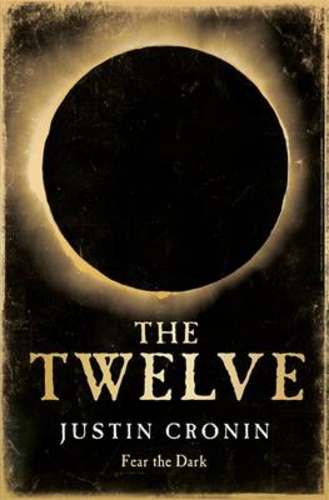
The Twelve takes us into a darker and more complex social world. Survival remains important, but power, oppression and human cruelty increasingly move to the foreground, along with the question of what kinds of societies might develop after civilisation collapses. The threat no longer comes exclusively from beyond the walls – although that threat has certainly not disappeared either.
The City of Mirrors turns the story in another direction again. The passage of time, ageing, the burdens of the past, loss and the possibility of beginning again become increasingly important. People we first met when they were young are now at very different stages of their lives. Their children grow up, their roles change, and they face questions that would be familiar even in a peaceful world – but which carry much greater weight here.
(Cronin himself said in an interview that by the third novel his characters were essentially “having a midlife crisis at the end of the world”.)
Meanwhile, the historical scale of the trilogy keeps expanding. It is not only the characters who age; their world ages as well. The past gradually becomes history, history becomes myth, and humanity repeatedly tries to find its place within it – with varying degrees of success.
What Makes Survival Worthwhile
The story would probably not work nearly as well if it relied only on worldbuilding and monumental events. Cronin devotes at least as much attention to human relationships. Friendships, love affairs, relationships between parents and children, belonging, loyalty, loss and sacrifice run throughout all three novels.
People do not struggle merely because they want to stay alive. There are people they love, people for whom they feel responsible, and relationships for which they are willing to take risks they might never take for themselves.
This thread becomes especially important in such a dark story. Love may not solve the problems, but it can at least give survival a meaning. And perhaps this is why it becomes so easy to care about these people. After a while, we are no longer interested only in whether they can defeat their enemies. We also want to know whether they will ever be happy again, whether they will find one another, whether they will manage to begin a new life, or simply whether they will be allowed a few peaceful years together.
Different forms of love connect generations throughout the story. Decisions someone makes for another person may continue influencing other lives decades later. A novel spanning such a long period has the opportunity to show something that also happens in reality, although we rarely have the chance to see the entire process: when we do something now, we turn the world slightly in another direction, and the consequences of our choices may extend far beyond us.
Not Exactly Light Reading
All of this takes time. Quite a lot of it.
The trilogy consists of three enormous books, and although the action scenes are genuinely action-packed and the tense situations can be extremely tense, Justin Cronin sometimes spends a long time with a particular character, location or secondary storyline. Occasionally he even returns to events we believed we had already left far behind.
The pacing is not always even, and the enormous cast of characters, locations and shifts in time demand considerable attention. Anyone looking for a tight, relentlessly fast-moving action novel may easily become impatient.
At the same time, this unhurried quality – together with storylines stretching across long periods of time – is partly what allows the reader to begin feeling at home in this strange world. There is time to get to know the people, understand the communities and become accustomed to the rules of their new lives.
A World Born from a Little Girl’s Idea
The origin of the story itself is worth a small detour. In 2006, Justin Cronin began developing what would eventually become the trilogy together with his eight-year-old daughter, Iris. She wanted a story in which a girl saves the world.
Their shared brainstorming became an activity they did together. Iris rode her bicycle while her father went alongside her, and over the course of several months they gradually constructed the story together.
What began as a game eventually became the plan for a novel, and finally a three-volume story that took ten years to complete. There is something particularly beautiful about that. From the shared game of a father and daughter grew a story that, in the end, is largely about the importance of human relationships, belonging and love in a world that has fallen apart.
Perhaps that is also the best answer to why Cronin’s trilogy works so well. The books are full of monsters, catastrophes, bloody confrontations and monumental events, yet what stays with us most strongly is the way people continue trying to live under any circumstances. They build communities, tell stories, love, make mistakes, fight, fall, hope and begin again.
And they love.
After spending three books living alongside them, readers may find that when the story finally ends, it is difficult not only to say goodbye to the characters, but also to leave behind a world in which none of us would actually want to spend even a single night.