Nearly 150 years ago, there was a day when noon came twice in several parts of North America. It was another step towards bringing the world’s timekeeping systems together.
On November 18, 1883, at midday in New York, a railroad worker glanced at his watch to check the time. His watch was perfectly accurate, and it showed exactly noon.
Then, about four minutes later, he looked at it again and adjusted it so that it showed noon once more. His watch was still accurate, and once again, it was noon in the city.
The Sun had continued on its way without stopping or turning back, and time travel had not yet been invented. (Although assigning a date to the invention of time travel somehow doesn’t seem quite right in the first place…) The watch was working properly, too. But on that day, people began coordinating their different local times according to a new system.
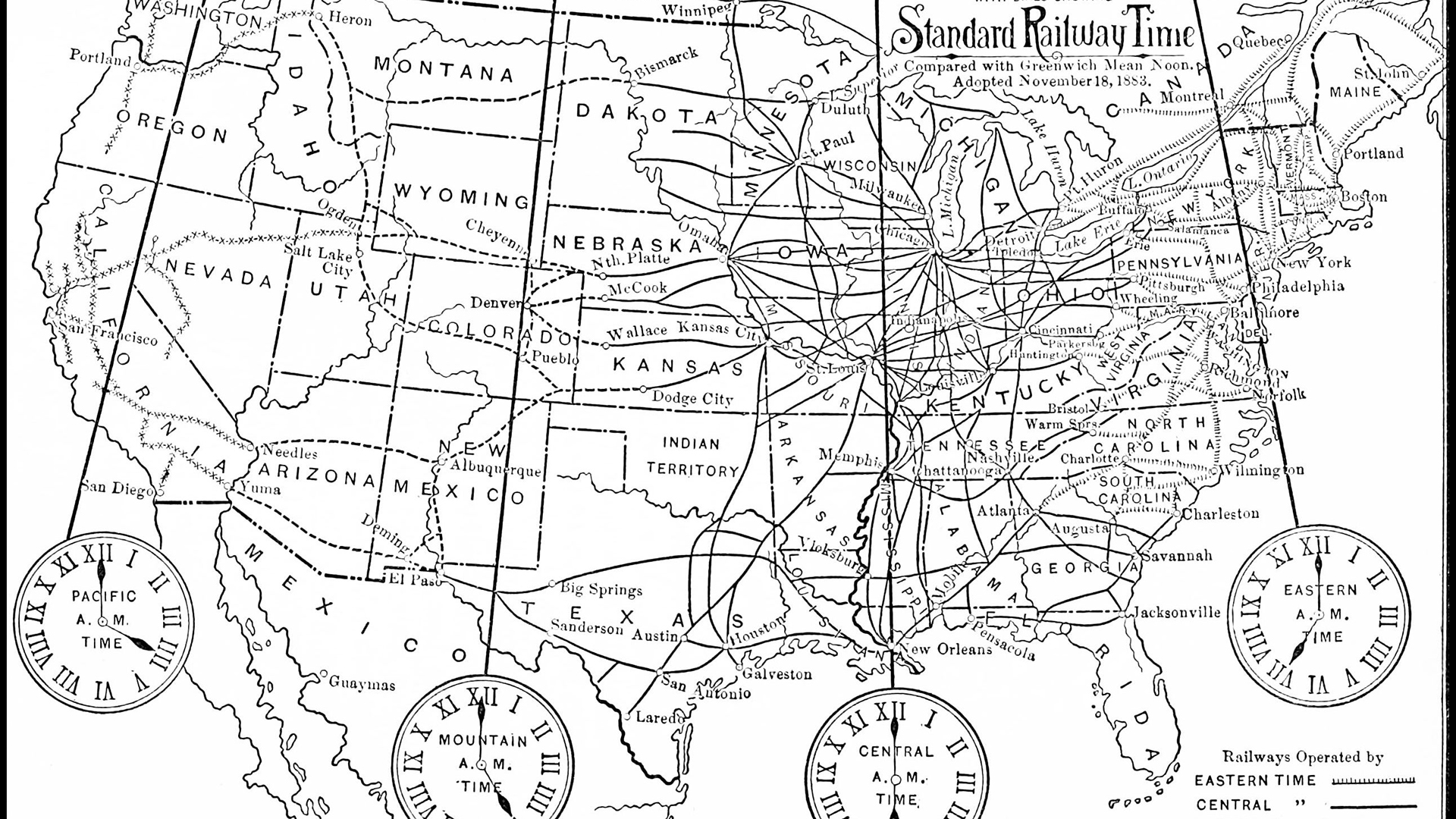
North American railroad companies adopted a more unified system known as Standard Railway Time. Until then, New York had followed its own local time, determined by the position of the Sun. Under the new system, however, the city’s clocks had to be aligned with a common time shared by an entire region. The old local noon and the new standard noon therefore occurred a few minutes apart.
The day later became known as the Day of Two Noons. In several American cities, people really could see noon on their clocks twice: once according to the old local time, and once according to the new railroad time.
From today’s perspective, perhaps the stranger thing is that there could previously have been several different, equally correct local times. Yet for centuries, that was perfectly normal.
Every City Had Its Own Time
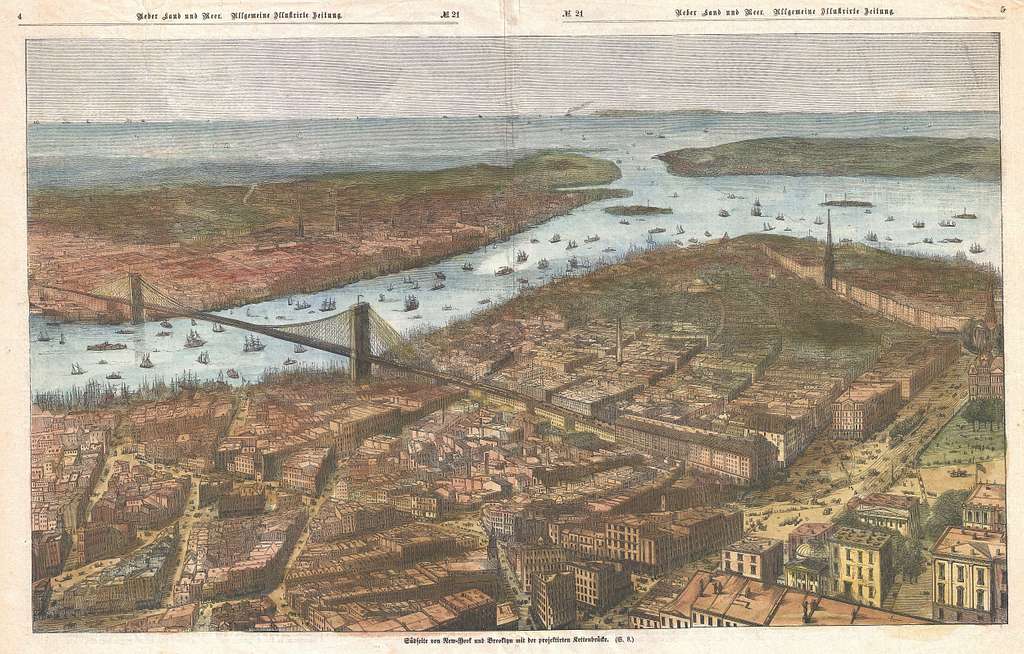
If we determine the time by observing the Sun, noon is a local event. It occurs roughly when the Sun reaches its highest point in the sky at a particular location.
But the Earth rotates, so this happens earlier in the east and later in the west. If we use this as our reference, clocks in two cities a few hundred kilometres apart may differ by several minutes, even if both are perfectly accurate.
Until the middle of the nineteenth century, almost every town in Britain also used its own local time. Bristol, for example, was about ten minutes behind Greenwich, while Cardiff was about thirteen minutes behind.
For a long time, this was not much of a problem.
If you travelled from London to Bristol on horseback or by stagecoach, a ten-minute difference was almost irrelevant compared with the length of the journey. Once you arrived, you could simply adjust your watch to the local time.
Then the railways arrived, and suddenly, minutes began to matter.
The Railways Reorganise Space
In our previous article, Around the World in Eighty Days – When Space Became Connected, we followed how local transport systems gradually began to form increasingly large networks.
The railways connected cities that had previously functioned, in many respects, as separate local worlds, bringing them into a shared system of daily operations.
But when space became connected, some rather peculiar side effects emerged.
For example, it suddenly mattered what exactly 12:00 meant.
The Great Western Railway’s 1841 timetable explicitly informed passengers that London time was used at every station on the railway. It also listed how much this differed from the local time in each town: approximately four minutes at Reading, eleven minutes at Bath and Bristol, and fourteen minutes at Bridgewater.
While a local community could get along perfectly well with its own local noon, a railway network could not.
If a train leaves one station at 12:05 and arrives at another at 12:40, everyone needs to understand those numbers in the same way. The clocks operating at different points in the network need to be connected to one another.
This is why Britain’s railways gradually adopted Greenwich Mean Time.
The Great Western Railway had already instructed its stations to use London time in November 1840, and in 1847, the Railway Clearing House also supported the adoption of Greenwich time.
By the mid-1850s, most public clocks in Britain were already showing Greenwich Mean Time, although it did not become Britain’s legal standard time until 1880.
So for a while, the time of the city and the time of the network existed side by side.
Pocket watches were even made that could display both local time and railway time simultaneously.
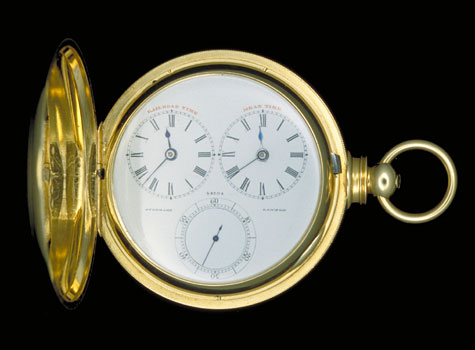
It was almost as though a person could live in two different times, depending on which system they happened to be connected to.
How Does the Same Time Reach Everywhere?
A common standard is not enough on its own.
If we agree that every station should use Greenwich Mean Time, we also need some way of knowing what time it actually is in Greenwich.
And putting a clock on a train doesn’t really solve that problem.
This is where something particularly interesting happens.
Time – or, more precisely, the current time of day – becomes information that can, and needs to, be distributed.
Accurate time signals had existed before.
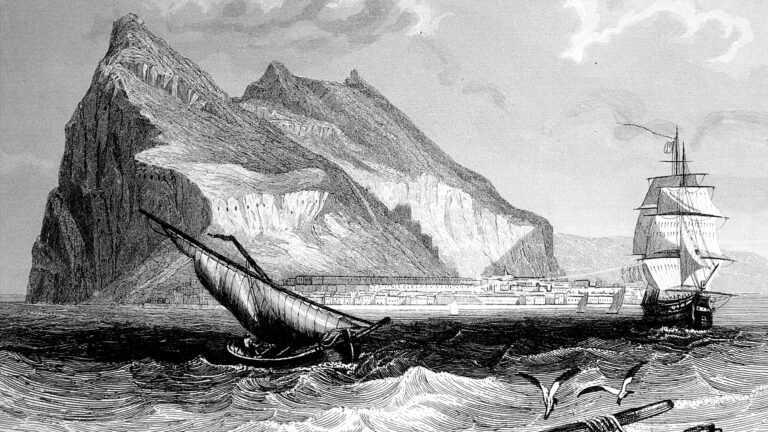
In 1833, the Royal Observatory in Greenwich installed what is known as a time ball on its roof. It is still in operation today.
The ball, originally black but now reddish in colour, is raised halfway up its mast at 12:55 each day, then all the way to the top at 12:58. At precisely 1:00 p.m., it drops, allowing navigators aboard ships on the Thames to set their chronometers.
(It worked rather like a clapperboard in filmmaking: a central signal that everything else could be synchronised to.)
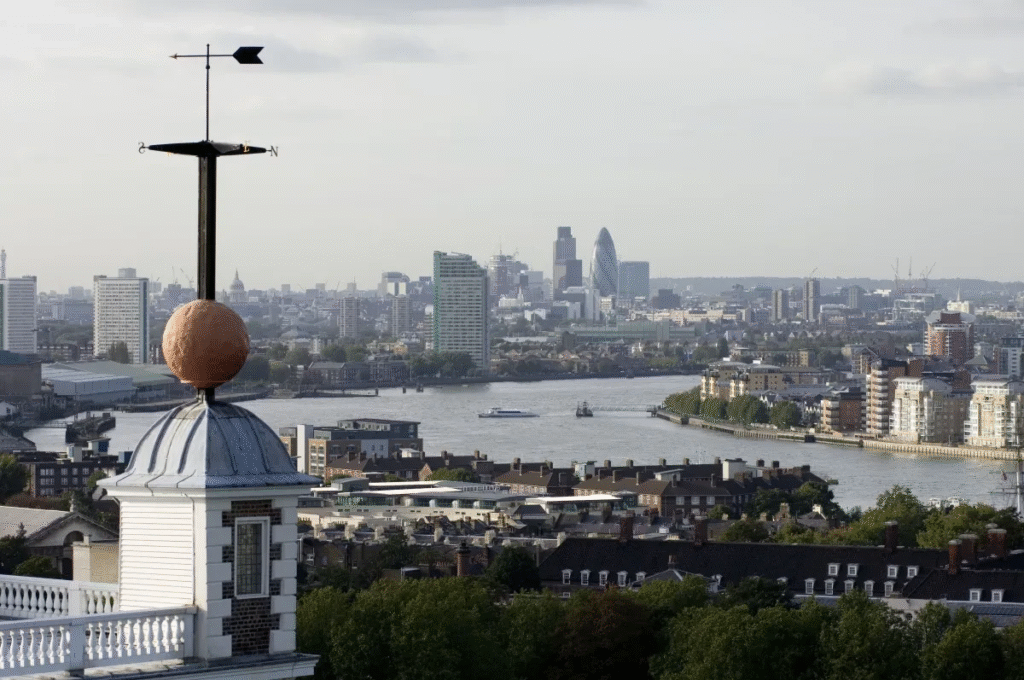
The problem, of course, was that you had to be able to see the signal.
With the arrival of the telegraph, however, there was no longer any need for the clock and the people wishing to synchronise their own clocks with it to be in the same place, within sight of one another.
In 1852, a new electrical clock system was installed at the Royal Observatory.
Signals from the central Shepherd master clock could be transmitted along telegraph wires. Greenwich time could thus reach London, followed by a whole series of British towns and railway stations.
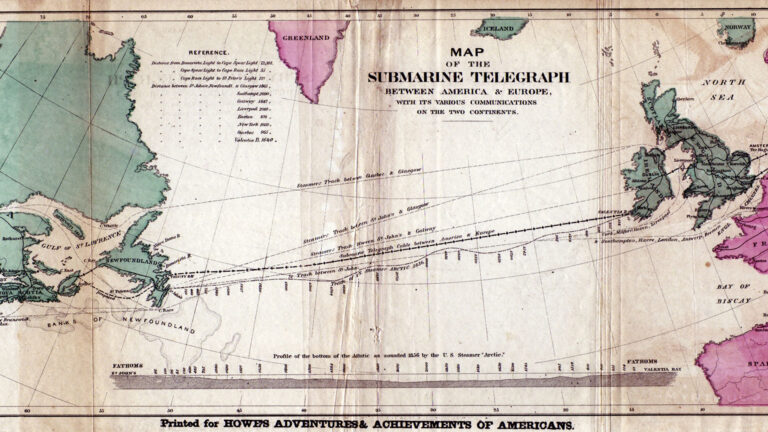
By 1866, Greenwich time signals were even being sent to Harvard University through the transatlantic cable.
Previously, a town would observe the sky and the movement of the Sun to determine its own time.
Now, a distant clock sent a signal along a wire, and another town adjusted its clocks accordingly.
Time was no longer merely something measured locally. It had become something that could be transmitted.
It was converted into electrical impulses, travelled through the network, and was then used to set clocks somewhere else.
The railways created the need for a common time, while the telegraph made it possible for that common time to be genuinely shared.
Fifty Different Railway Times
In North America, all of this created much more conspicuous problems across a vastly larger area.
During the 1850s, American railroads used approximately fifty different regional times.
These were not necessarily the local solar times of individual towns. Different railroad companies and regions introduced their own operating times, and nearby communities often adopted the time used by one of the railroads.
When it was noon in Washington, D.C., that did not mean it was noon everywhere.
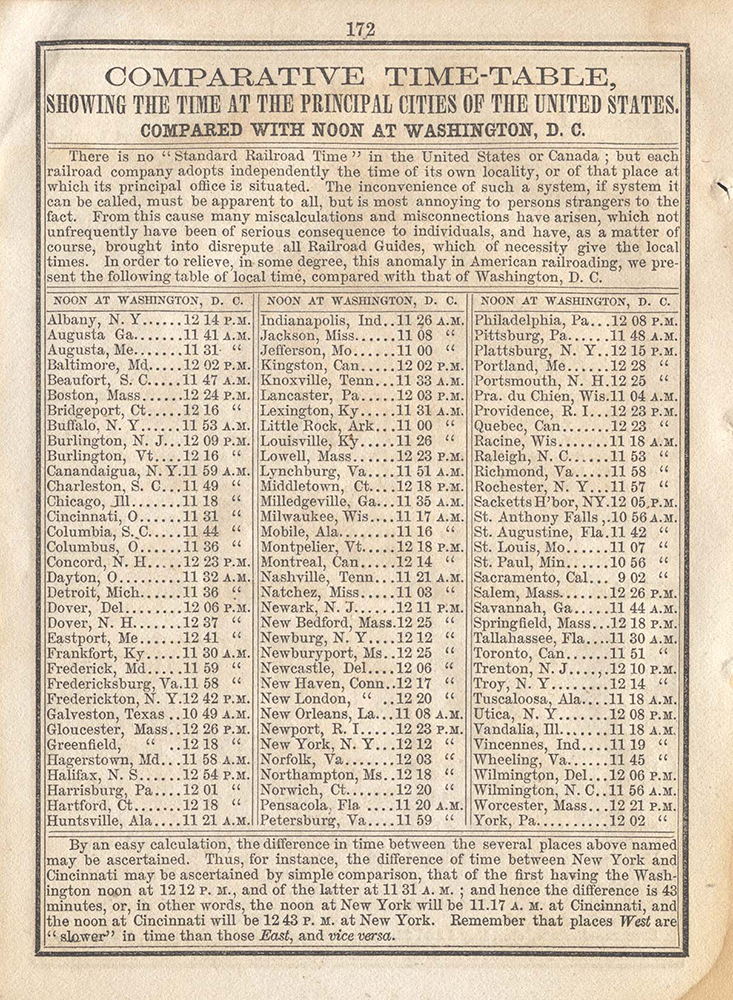
In other words, new time systems were being layered on top of the existing local ones.
Gradually, time was becoming less a matter of geography and more a matter of networks. And it was becoming increasingly obvious that something needed to be simplified, because the whole thing was getting almost impossible to keep track of.
William F. Allen, editor of the Traveler’s Official Railway Guide and secretary of the railroad companies’ time-coordination organisation, developed a solution in which large regions of North America would share a common time.
Under his system, neighbouring zones would differ from one another by exactly one hour.
On October 11, 1883, railroad officials approved Allen’s plan and scheduled the changeover for November 18.
Which brings us right back to the Day of Two Noons.
November 18, 1883
The new system established five North American railway time zones: Intercolonial, Eastern, Central, Mountain, and Pacific.
Four of these covered the contiguous United States.
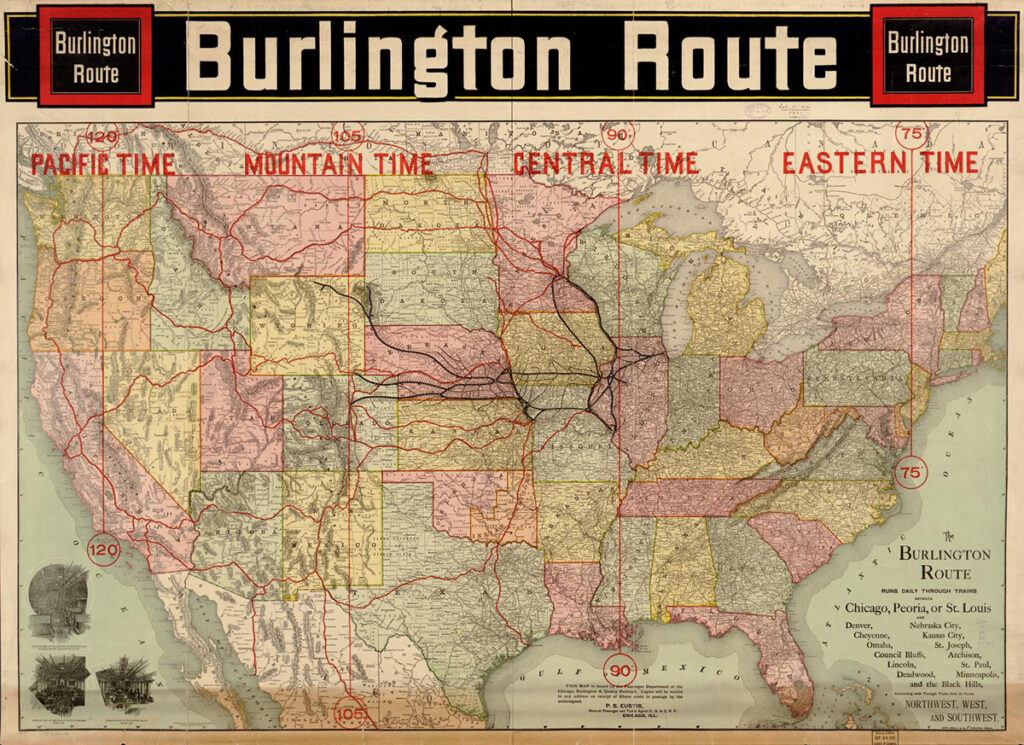
When noon arrived under the new system on November 18, 1883, the railroad clocks were reset.
The process of synchronisation was also assisted by time signals transmitted by telegraph from the United States Naval Observatory and the Allegheny Observatory in Pittsburgh.
In New York, standard noon, determined by the 75th meridian west of Greenwich, arrived approximately four minutes after local noon.
And so, on the same day, there were two noons.
But the United States government had not ordered the change.
It was the railroad companies that had reached an agreement among themselves, because their own increasingly large system needed a common standard to operate.
Cities and other institutions then began following their example.
Standard time was not regulated nationwide by US federal law until 1918.
The network established the standard before the state did.
Now the Whole World Needs to Be Synchronised
But transport networks did not stop at national borders, as we saw in our previous article.
Ships crossed oceans, while telegraph cables connected increasingly distant locations.
Soon, the problem was no longer simply how to synchronise New York with Chicago, or London with Bristol.
It was how to establish a common reference for measuring time across the entire world.
In October 1884, forty-one delegates representing twenty-five countries gathered in Washington, D.C., for the International Meridian Conference.
The conference is often described as the occasion when the time zones we know today were invented.
That is not what happened.
The delegates proposed that the meridian passing through the Greenwich Observatory should become the common prime meridian from which longitude would be measured.
They also agreed on the principle of a universal day beginning at midnight, Greenwich Mean Time.
In other words, they established a reference point against which other measurements could be made.
But the resolution explicitly stated that the use of the universal day should not interfere with the use of local or other standard times.
The conference did not agree on the adoption of the time-zone map we know today. That developed only gradually.
Individual countries progressively adopted standard times through their own decisions, increasingly using offsets of whole hours from the Greenwich reference.
Japan, for example, enacted its standard-time system in 1886 and began using a time nine hours ahead of Greenwich in 1888.
France did not adopt civil time aligned with Greenwich until 1911.
The world did not reset its clocks on a single day.
It spent decades synchronising them.
A Time Zone Is Not a Natural Phenomenon
There is science behind the system, primarily physics, geography, and geometry.
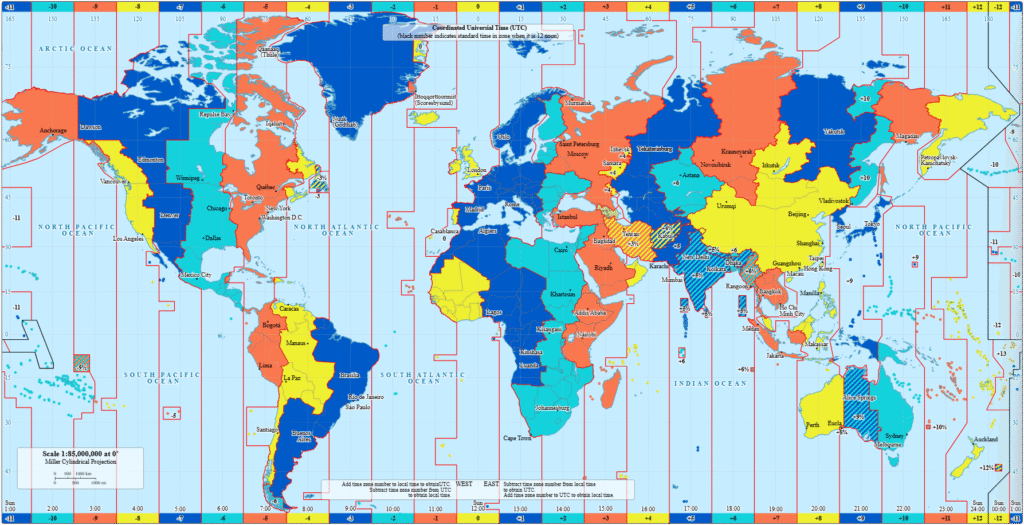
The Earth completes one rotation in approximately 24 hours, and a full circle consists of 360 degrees. This means that 15 degrees of longitude corresponds to roughly one hour of time difference.
But if we look at a modern time-zone map, it quickly becomes clear that the boundaries do not follow neat, straight lines.
They bend around national borders, regions, economic relationships, and political decisions.
That is because a time zone is not merely a description of the Sun’s position.
It is also a social agreement about who wants to operate according to the same time.
Even in the nineteenth century, then, common time was no longer simply something given by nature.
It had become a form of infrastructure.
(Of course, even today, not every human community organises its life according to hours, minutes, and time zones.
In some Indigenous Amazonian communities, daily activities are organised more around events, the position of the Sun, or changes in the environment than around precise clock times.
Researchers studying the Amondawa language and culture, for example, have found that the community does not have a numerical calendar system and does not express temporal relationships through the same numerical and spatial concepts commonly used in modern industrial societies.
In other communities, instead of specifying an exact time, people may use expressions such as “when the Sun goes down”, “before lunch”, or “when it gets cooler”.
In other words, time zones and the division of time into a linear sequence of numbered units are not self-evident features of human life. They are coordination systems that have developed historically and culturally.)
Ever Smaller Differences Begin to Matter
For the railways, differences of just a few minutes had already become a problem.
Newer networks, such as aviation, demanded even greater precision.
The telegraph could already provide time signals accurate to roughly a second. Radio made it possible to broadcast precise time signals simultaneously across vast areas.
Satellite systems and digital communication, meanwhile, operate on timescales that make the nineteenth-century eleven-minute difference between Bristol and London seem almost unimaginably large.
Meanwhile, the fundamental unit used to measure time had also changed.
For a long time, the second was defined in terms of astronomical phenomena.
In 1967, however, the General Conference on Weights and Measures adopted a new definition: from then on, the second was defined as the duration of 9,192,631,770 periods of the radiation corresponding to a particular transition in the caesium-133 atom.
The change was significant, and it can also be seen as symbolic.
For most of human history, we looked to the sky to find our measure of time, to the great things above us.
Now we look to atoms.
The Complicated Business of Maintaining a Common Time
At this point, our story takes a rather peculiar turn.
Coordinated Universal Time, or UTC, the principal international reference for the world’s civil timekeeping systems, is not found on the face of one special clock.
Metrology institutes and observatories around the world maintain their own atomic clocks and local time scales.
They send their measurement data to the International Bureau of Weights and Measures, or BIPM, which uses these data to calculate international time scales.
This means that our modern common time is itself the result of a network.
Clocks take measurements in different countries. Their measurements are compared, and satellite-based and other time-transfer systems connect them.
From these results, a reference is established, and further systems synchronise themselves to it.
Time, which was once measured separately in every town, now travels around the planet as information.
When Time Became Connected
As long as towns and cities operated largely as separate worlds, they could have their own times without interfering with one another.
Geographical location determined the time: Bristol had its own noon, and New York had its own.
But once these places became connected through networks, their different times increasingly began to interfere with the operation of the networks themselves.
The construction of railways and transport networks reorganised space.
Then it became clear that connected places needed more than the ability to reach one another. They also had to agree on what time it was.
The integration of space thus began to make the integration of time necessary.
But something else was needed to make this possible.
There is little point in agreeing on a common time if we cannot transmit it from one place to another.
Greenwich time could become the time of an entire country, and later of a much larger system, only when it could travel as a signal through telegraph wires.
The creation of a common time therefore already depended on the rapid flow of information.
And here, our story begins to flow into the next one.
Places had become connected. Their clocks had become connected.
Now the question was: how did their information become connected?
Sources and Further Reading
Smithsonian National Museum of American History: On Time – Time Zones
An overview of local time, North American railroad time, and the changeover on November 18, 1883, including historical objects and illustrations.
Smithsonian National Museum of American History – Read the article
Library of Congress: The Day of Two Noons
The history of the American railroad time reform of 1883, including contemporary newspaper sources and the development of the new time-zone system.
Library of Congress – Read the article
Network Rail: 180 Years of Railway Time
The development of British Railway Time, the Great Western Railway’s adoption of London time in 1840, and the differences between local times listed in its 1841 timetable.
Network Rail – Read the article
Royal Museums Greenwich: What Is Greenwich Mean Time (GMT) – and Why Does It Matter?
The history of Greenwich Mean Time, the development of railway time, and the electrical clock system used to distribute accurate time signals.
Royal Museums Greenwich – Read the article
Royal Observatory Greenwich: The Adoption of a Prime Meridian and the International Meridian Conference of 1884
A detailed historical examination of the 1884 conference, its actual resolutions, and the international spread of standard time.
Royal Observatory Greenwich – Read the article
International Meridian Conference: Proceedings of the International Meridian Conference, Washington, 1884
The original proceedings and resolutions of the conference, including the proposals to adopt the Greenwich meridian and establish a universal day.
Project Gutenberg – Read the original proceedings
National Institute of Standards and Technology: A Brief History of Atomic Time
The development of atomic clocks and the 1967 redefinition of the second in terms of the caesium-133 atom.
International Bureau of Weights and Measures (BIPM): Time Metrology
The operation of Coordinated Universal Time (UTC) and International Atomic Time (TAI), and the collaboration between timekeeping laboratories around the world.