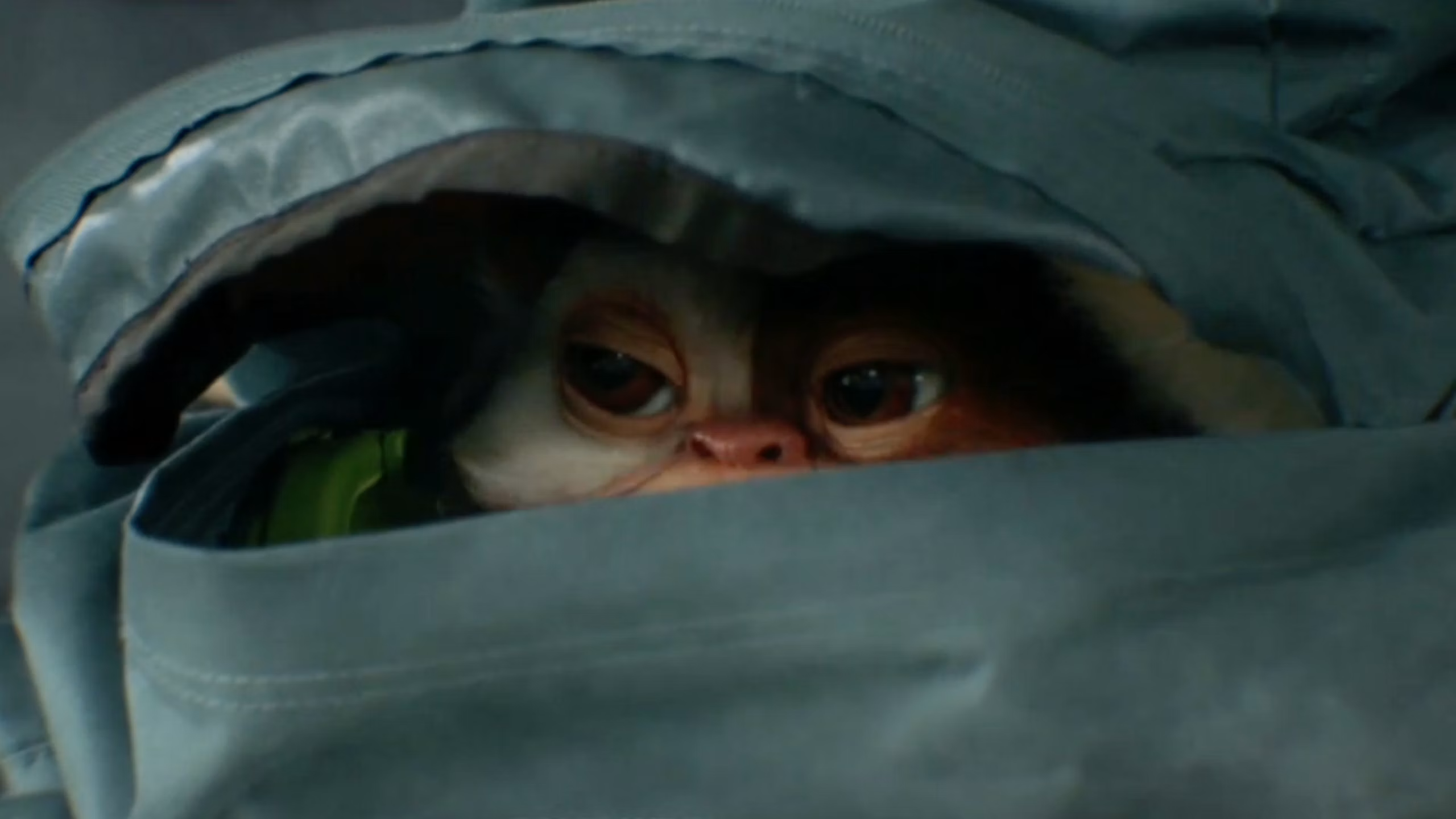
The 1984 Gremlins was cute for a horror movie and horrifying for a children’s film. In the end, it helped force Hollywood to create an entirely new age rating: PG-13.
Gizmo is coming back! More than four decades after the first Gremlins film, Warner Bros. now appears to be genuinely making a third theatrical movie. And two names are behind the project without whom the original probably would not have become the film we know today: Chris Columbus and Steven Spielberg.
Gremlins 3 was originally scheduled for 2027, but as things currently stand, we will have to wait a little longer: until October 2028. Columbus, who wrote the first Gremlins, is returning this time as director and producer, while Spielberg will once again serve as executive producer. There is no official plot or cast yet, so we still have no idea exactly what kind of trouble Gizmo will find himself in when 2028 rolls around.
What we do know is that he once caused a considerable amount of chaos in Hollywood. So much, in fact, that he was partly responsible for the creation of an entirely new film rating.
One Furry Creature, Three Rules
At first glance – or at least if you squint a little while taking that first glance – the original Gremlins looks almost like the perfect family Christmas movie. There is a snowy American small town, a likeable young hero, an eccentric inventor father, a Christmas present, and of course Gizmo, who looks as though someone had designed him specifically to make sure every child would want a plush version in their bedroom a few months later.
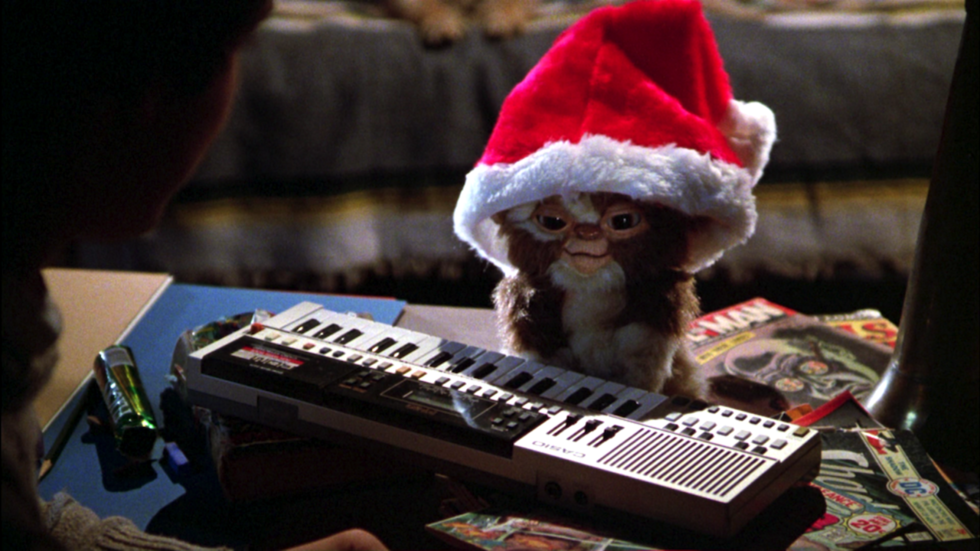
The instruction manual is admittedly a little unusual. Keep him away from bright light, don’t get him wet, and whatever happens, never feed him after midnight. Naturally, the rules do not remain unbroken for long, and the peaceful little town soon looks as though the cast of The Muppet Show had transferred to the horror department.
And this is actually the child-friendly version – at least compared with what Gremlins was originally going to be.
The Original Script
According to Joe Dante’s recollections, Spielberg was looking at the time for a low-budget horror movie for the newly established Amblin Entertainment. Columbus had written Gremlins from his own original idea; the script eventually found its way to Spielberg, who liked it. At that point, however, the story looked nothing like a family movie designed to sell toys.
Columbus later recalled that in the original screenplay, the gremlins would have killed Billy’s dog, decapitated his mother, and Billy would have seen her head rolling down the stairs. And at the end, Gizmo himself would have transformed into Stripe, the leader of the gremlins.
Compared with that, the finished movie is positively friendly. Even if a monster does occasionally end up in a blender or a microwave.
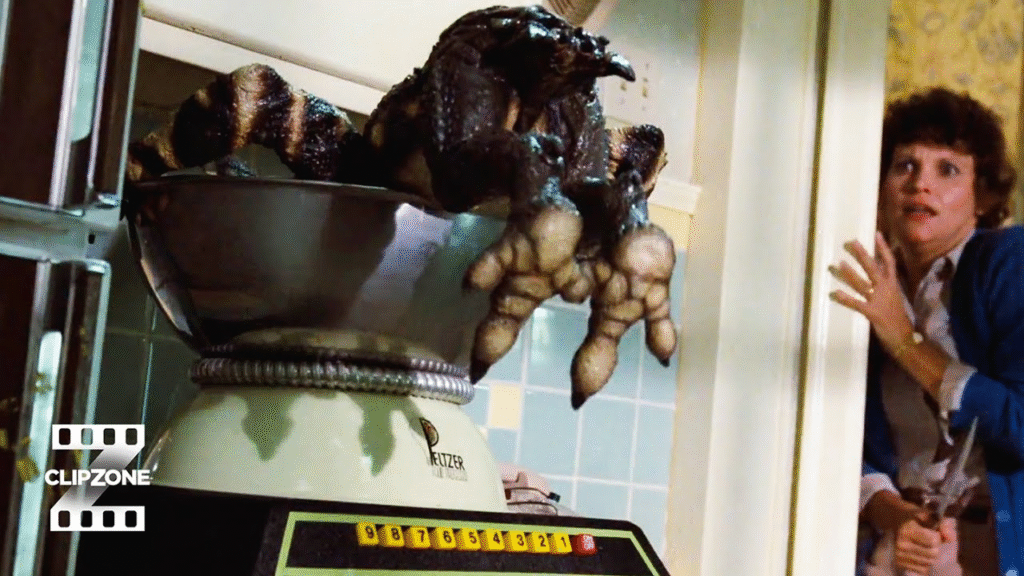
During development, Spielberg suggested that Gizmo should remain Billy’s lovable companion and that Stripe should become a separate creature. It sounds like a relatively small script change, but it was probably one of the most important decisions in the history of Gremlins. It meant that Gizmo became more than simply a cute prelude to the arrival of the monsters.
The film could now show two extremes of the same type of creature: a mogwai can be something we instinctively want to hug – and from that very same creature, something can emerge that chases us around the kitchen with a knife.
Sometimes the only thing separating cute from monstrous is a late-night snack.
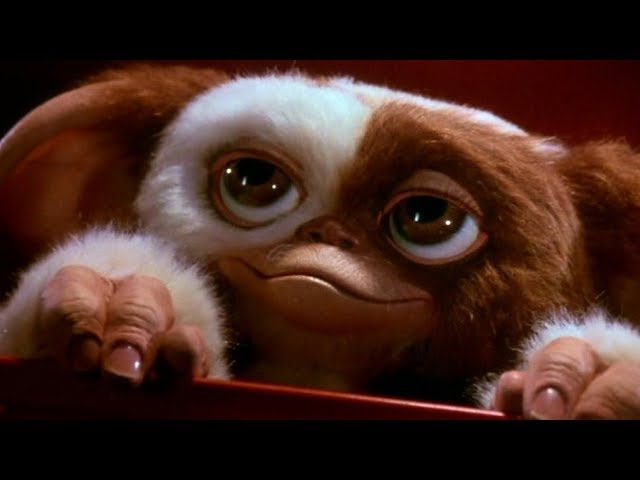
Except Children Were Watching It Too
In 1984, the American film-rating system had a slight problem. PG-13 did not exist. There was G, PG and R. PG essentially meant that some material might require parental guidance, while an R-rated film could only be seen in cinemas by viewers under 17 if accompanied by an adult.
There was nothing in between.
This worked reasonably well until films started appearing that clearly were not R-rated adult movies, but were becoming increasingly difficult to describe as comfortably suitable for PG audiences.
And in the spring and summer of 1984, two such films arrived almost back to back – both with Steven Spielberg’s name attached.
The first was Indiana Jones and the Temple of Doom, a movie in which, among other things, people eat insects and chilled monkey brains, children are forced to work in an underground mine, and a man has his still-beating heart ripped out of his chest by hand.
PG.
A few weeks later came Gremlins.
Also PG.
The Muppet Show with a Microwave
The problem with Gremlins was not simply that it was violent. It was the kind of movie in which that violence appeared. Audiences were given a Christmas film promoted with Steven Spielberg’s name, an unbelievably adorable central creature, and a collection of funny little monsters… and then Billy’s mother started slaughtering them with various household appliances.
And we have not even mentioned Kate’s Christmas story: her father dressed as Santa Claus, tried to climb down the chimney, got stuck, died, and was only discovered days later.
Roger Ebert, one of America’s best-known film critics, specifically noted when the film opened in 1984 that some scenes in Gremlins were surprisingly harsh for a movie to which large numbers of children were being taken.
The debate quickly grew beyond Gremlins itself, helped considerably by the latest Indiana Jones adventure. What do you do with a movie that is too intense for PG, but nowhere near severe enough for an R?
Spielberg Called Jack Valenti
Over the decades, countless simplified versions of the creation of PG-13 have circulated, but contemporary reports make it clear that Gremlins and Indiana Jones and the Temple of Doom really did play a central role.
By June 1984, there was already a public discussion about whether a new category was needed between PG and R. A June 22 report in The Washington Post specifically highlighted Spielberg, who had directed Temple of Doom and served as executive producer on Gremlins.
Spielberg later recalled that after the criticism surrounding the two films, he called Jack Valenti, head of the MPAA and the American film-rating system, and suggested that they needed something between PG and R – perhaps PG-13 or PG-14. Valenti ultimately went with the former, and the new category became available on July 1, 1984.
One of the best details in the whole story is the timing. Gremlins had already opened in American cinemas on June 8. By the time Hollywood solved the problem, the film was already playing with a PG rating – and that rating could not be changed.
So Gremlins helped create an age rating that the film itself could never receive.
The first PG-13 movie actually released in cinemas was Red Dawn in August 1984.
By then, Gizmo and company had already done their part.
The Sequel Turned Everything Up Even Further
A successful Hollywood movie is usually followed fairly quickly by a sequel. In the case of Gremlins, it took six years. (Still better than what happened with Spaceballs.)
Director Joe Dante was not particularly enthusiastic about simply telling the same story again. When he finally returned, however, he was given a degree of creative freedom that is rarely seen at a major studio – particularly on a sequel.
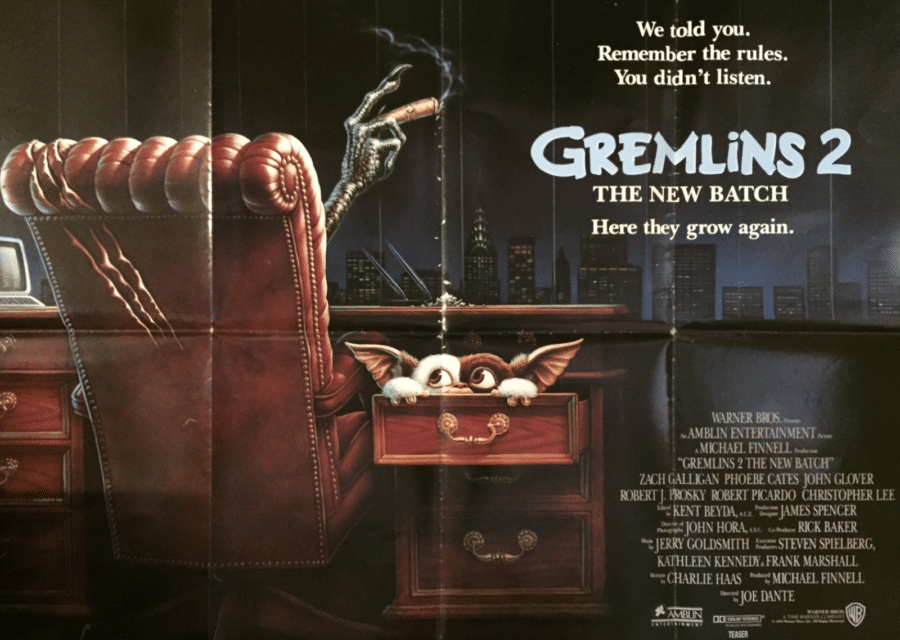
The result was 1990’s Gremlins 2: The New Batch. If the first film was a strange mixture of horror and Christmas family comedy, the second was barely controlled chaos. There were now intelligent gremlins, bat gremlins, spider gremlins, an electrical gremlin, a female gremlin, and practically anything else the filmmakers could think of.
The movie also spends much of its running time making fun of its predecessor – even the famous rules surrounding the mogwai. What exactly does “don’t feed them after midnight” mean? When is it safe to feed them again? What happens on an aeroplane crossing time zones? And what if a mogwai swallows something after midnight that had been stuck in its teeth since earlier?
And so on.
At one point, the gremlins even appear to destroy the film itself inside the cinema projector.
Then, for a While, Nothing…
The theatrical series stopped for a long time after 1990, but in recent years the world of Gremlins has gradually begun creeping back into popular culture.
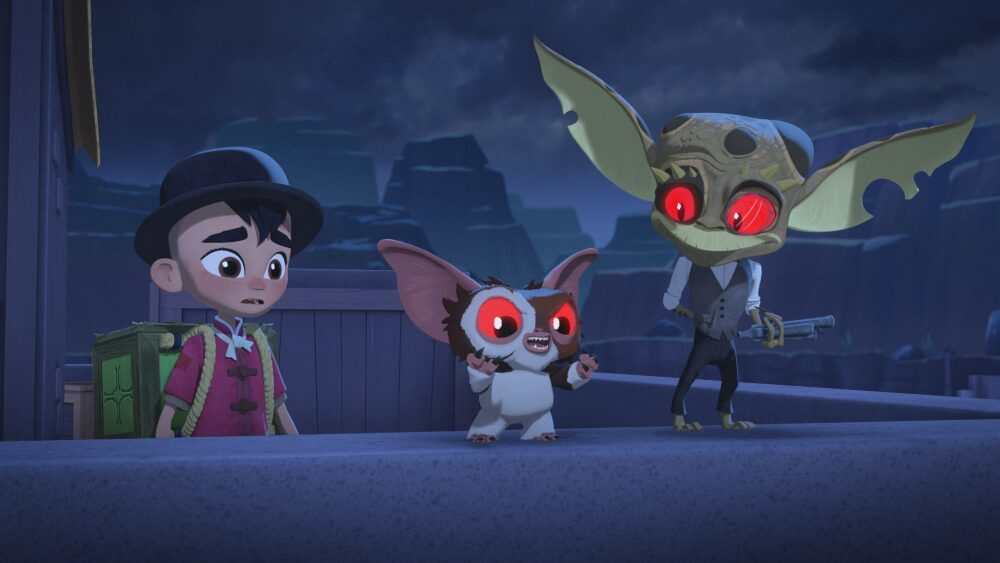
The animated series Gremlins: Secrets of the Mogwai premiered in 2023. Rather than continuing the movies, it serves as a prequel: set in 1920s Shanghai, it tells the story of young Sam Wing – the elderly Chinese shopkeeper from the first film – and his first encounter with Gizmo.
The series then received a second season under the title Gremlins: The Wild Batch, with the story moving on to San Francisco and the American West. Joe Dante was involved as a consulting producer.
So by the time the third theatrical film was officially announced, Gizmo had actually already returned.
Just as a cartoon character.
What Will 2028 Bring?
Gremlins is now itself part of the 1980s pop culture that Hollywood regularly mines for new films, television series and franchises. (Stranger Things, anyone?)
Gizmo is perfect for this. He is still instantly recognisable, still adorable, and still highly marketable as a plush toy. Most people probably remember the three rules even if they have not watched the movie in twenty years.
Which is precisely why it would be very easy to make a Gremlins 3 that spends ninety minutes or two hours showing us how much we all love the original Gremlins. Building the movie around that alone, however, would be risky. The first film became interesting and cultish because, at one point, it suddenly put a monster in a microwave. The second became interesting because instead of reproducing the first film, it practically dismantled it.
So what should the third one do?
Chris Columbus has previously said that he and Spielberg worked on several possible scripts, but did not want to make another Gremlins movie simply because the name still had commercial value. That is an encouraging attitude.
The most important question probably will not be whether they can make Gizmo look beautiful and cute again. Based on what has been said so far, the filmmakers favour practical effects, meaning that the creatures would largely be brought to life with puppets rather than CGI.
Which makes us happy.
He’ll definitely be cute.
The real question is whether they can make him do something we would never expect.