Last December, it still looked as though one of Hollywood’s biggest restructurings was about to be sealed: Netflix had reached an agreement to acquire Warner Bros. Discovery. A few months later, however, it became clear that the deal was not going to happen. Warner found a new suitor, while Netflix walked away with a $2.8 billion break-up fee.
Which isn’t all that bad.
The new suitor is Paramount Skydance.
So the cast has changed, but in some respects the basic situation remains the same: two enormous media companies are moving under one roof. Iconic film studios, streaming platforms, television networks and franchises will all belong to a single corporation.
And the question remains whether combining those resources will produce more and better films – or simply leave fewer people deciding what the rest of us get to watch.
Netflix Almost Bought It…
On December 5, 2025, Netflix and Warner Bros. Discovery reached an agreement. Under the plan, Warner would first have separated much of its traditional television network business into a standalone company, while Netflix would acquire the film and television studios, HBO, HBO Max and Warner’s enormous content library. The transaction had an enterprise value of $82.7 billion.
When we wrote about the deal last year, it seemed very likely to go through, although we also pointed out that regulators were still examining it, could impose conditions, or could even prevent it altogether.
There had been warning signs. Paramount Skydance had already tried to acquire the entirety of Warner Bros. Discovery in late 2025. Its first offer was $30 per share in cash, which Warner’s management rejected.
Paramount did not give up. In February, it raised the offer to $31.
That was when the story changed.
On February 26, 2026, Warner’s board decided that Paramount’s offer was the better one, and the following day it terminated its agreement with Netflix. Paramount paid the $2.8 billion break-up fee owed to Netflix on Warner’s behalf.
They did not waste much time. The new agreement was signed on February 27. Paramount will pay $31 for each Warner share, valuing WBD as a whole at an enterprise value of roughly $110 billion.
So within a few months, one of Hollywood’s largest studios went from Netflix to Paramount as if, in the final twenty minutes of a romantic comedy, someone suddenly realised that the person they were supposed to marry was not the one they had spent the entire movie with.
(All right, romantic comedies do not usually pay $2.8 billion in break-up fees.)
Under the current schedule, the Paramount–Warner merger is set to close on October 6, 2026. The U.S. Department of Justice completed its antitrust review in June and concluded that the transaction was unlikely to cause substantial harm to competition in streaming, linear television, or theatrical film production and distribution. A separate lawsuit brought by a group of U.S. states ended in a settlement at the end of September, removing that obstacle as well.
So from here, it looks fairly straightforward.
Batman, Captain Kirk and SpongeBob
There is one very important difference between Netflix’s failed plan and the Paramount deal – apart from the obvious fact that one failed and the other made it through.
Netflix would not have acquired the whole of Warner Bros. Discovery. It wanted Warner’s film and television studios, HBO and the streaming business, while much of the traditional television network operation would have been spun off into a separate company.
Paramount, by contrast, is buying the whole of Warner Bros. Discovery.
That means a single corporate group will now contain Paramount Pictures, Warner Bros., New Line Cinema, DC Studios and HBO; CBS, CNN, MTV, Nickelodeon, Comedy Central, Cartoon Network, Discovery, TLC, Food Network and Adult Swim; as well as Paramount+, HBO Max and Pluto TV.
And then there are the stories and franchises.
Just to name a few:
Harry Potter.
Batman and the entire DC Universe.
Game of Thrones.
Mission: Impossible.
Top Gun.
Star Trek.
SpongeBob SquarePants.
Teenage Mutant Ninja Turtles.
Transformers.
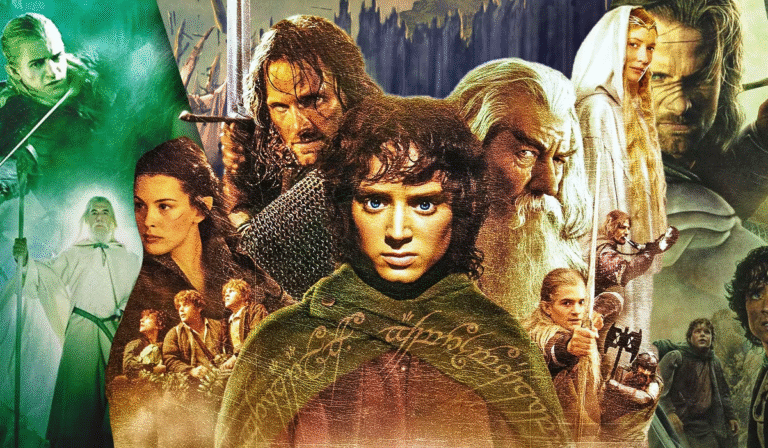
The Lord of the Rings.
Of course, in many of these cases this does not mean that the conglomerate owns every conceivable right exclusively. Hollywood franchise rights are usually far messier than that.
But one thing is certain: a remarkable collection of cultural brands, each capable of sustaining entire businesses on its own, will now sit inside the film and television machinery of the same corporate group.
Hollywood Strikes Back
With Warner, Netflix would probably have become an extraordinarily powerful streaming and content company.
Paramount–Warner is a more traditional kind of media empire. It has its own film studio, television studio, nationwide U.S. broadcast network, news channels, cable networks, streaming platforms, sports broadcasting rights, children’s channels, theatrical distribution operation and an enormous content library.
In a sense, streaming did not finally devour Hollywood.
Hollywood instead tried to grow large enough to hit back.
Paramount itself argues that the merger will give the new company sufficient scale to become a major global streaming competitor alongside Netflix, Amazon and Disney.
It also shows just how dramatically the world has changed. In 2010, the then CEO of Time Warner compared Netflix’s chances of threatening the established media giants to those of the “Albanian army”.
Back then, Hollywood was looking down on the internet newcomer.
Now, in a sense, two Hollywood giants are joining forces in order to become large enough to compete with it.
Six Billion Dollars Will Have to Disappear from Somewhere
One of the less reassuring numbers in last year’s article was Netflix’s expectation that integrating Warner would generate annual savings of $2–3 billion.
Paramount’s plan is considerably larger. The company expects more than $6 billion in annual cost synergies within three years of closing the merger.
“Synergy”, incidentally, is a truly wonderful corporate word. It sounds so much nicer than saying that two companies currently have two similar departments and will probably not need both of them forever.
Paramount says most of those six billion dollars will not come from layoffs or cuts to film production. The companies could, for example, combine their streaming technology systems and cloud services, build shared corporate IT infrastructure, and reduce duplicated administration, procurement, marketing costs and real-estate use.
All perfectly reasonable-sounding decisions.
David Ellison, founder of Skydance and head of Paramount, has also acknowledged that corporate support functions will need to be “streamlined” – which means some job cuts are, in practice, almost inevitable.
Paramount nevertheless says the planned content savings account for less than ten percent of the two companies’ combined content spending, and that none of those savings are intended to come from reducing the production capacity of the film and television studios.
That sounds good.
And it may even be true.
But six billion dollars is an enormous amount of money. Someone, somewhere, is going to notice it.
With a merger of this size, it is not only the number of films being made that matters. It also matters how many production companies receive work, how many separate development teams are able to approve projects, how many executives have the opportunity to look at a strange idea and say, “All right, let’s try it,” and how many doors a screenwriter can knock on with the same script after the first company turns it down.
Creative diversity cannot simply be measured by counting finished films.
Cinemas Probably Came Out of This Quite Well
One of the biggest questions in last year’s Netflix–Warner article concerned cinemas.
For good reason.
Netflix built much of its history around the idea that films should be watched at home rather than in cinemas. Although it has recently become more open to traditional theatrical distribution, it was reasonable to ask what would happen to Warner, one of Hollywood’s most important theatrical studios, under Netflix ownership.
Since then, this part of the story has taken a surprisingly dramatic turn.
When the Paramount deal was first announced, the company promised that the combined business would make at least thirty theatrical films a year. But the antitrust settlement reached with U.S. states in September went much further: the promise became a concrete obligation.
During the first two years, the new company must release at least thirty films annually in U.S. cinemas. During the following three years, the minimum rises to thirty-two films a year. Twenty of the films in each of the first two years – and twenty-one in each of the following years – must receive wide releases on at least 2,000 screens. At least four independent films must also be distributed every year.
Films counted towards the requirement must receive theatrical windows of at least 45 days and cannot arrive on subscription streaming services until at least 90 days after their theatrical debut.
The company must also spend at least $300 million more per year on U.S. film and television production than the two companies collectively spent in 2025, and for five years it may not close or sell either the Paramount or Warner studio lot.
So one of Hollywood’s biggest mergers was ultimately approved under conditions that include requiring Hollywood to continue making films for cinemas.
For those of us who love movie theatres, that is fairly good news.
Will Two Streaming Services Become One?
Paramount is also making no secret of its intention to combine the technological infrastructure behind Paramount+ and HBO Max.
Its cost-cutting plans explicitly include the “consolidation” of streaming technology systems – another magnificent piece of corporate vocabulary.
That does not necessarily mean that either brand will suddenly disappear overnight.
But we are trying to be careful here – particularly after what happened with the Netflix deal.
Last year, it seemed perfectly logical to discuss how HBO might eventually be absorbed into Netflix’s system. Now we know that even a signed Hollywood deal worth tens of billions of dollars should not be treated as an absolute certainty.
What we know with something close to certainty is this: Paramount and Warner’s streaming operations will belong to the same company, they intend to integrate them technologically and commercially, and the company wants to use its increased scale to compete more efficiently with Netflix, Disney and Amazon.
Whether that eventually means a single service, two separate brands sharing the same infrastructure, bundles, or something entirely different is something we should probably describe as fact only after it has actually happened.
(Given Warner’s recent history, predicting what its streaming platforms will be called is risky enough anyway.)
So Are There Only Four Left Now?
If we are talking about the traditional major Hollywood studios, yes: another independent centre is disappearing.
Disney acquired much of 20th Century Fox in 2019 – which is why, for example, Deadpool and Wolverine could eventually meet the rest of Marvel’s cinematic characters.
Now Paramount and Warner are becoming part of the same company.
So Batman can beam himself aboard the Enterprise, Ethan Hunt can head to Mordor to rescue Harry Potter, and Megatron can hold him captive after joining forces with Sauron.
That leaves four independent giants among the traditional major Hollywood studio groups: Disney, Universal, Sony and the new Paramount–Warner group.
Except that in 2026, this no longer describes the film industry very well.
Netflix has meanwhile become one of the world’s largest producers of films and television series. Amazon owns MGM. Apple spends billions of dollars on its own films and shows.
So while old Hollywood is becoming more concentrated, new major players have grown alongside it.
And this is precisely one of Paramount’s arguments: a larger Paramount–Warner can become a stronger competitor to Netflix, Amazon and Disney.
There is some truth in that.
But there is also an interesting paradox.
Apparently, one way to increase competition is for two competitors to stop competing with one another.
What Changed Since Last Year – And What Didn’t
If we reread our Netflix–Warner article now, it makes for an interesting comparison.
The biggest mistake, naturally, was the ending.
Warner did not go to Netflix. Netflix and HBO did not merge. Warner’s television networks were not spun off in the way the previous agreement had planned, and the concerns surrounding cinemas did not develop in the way that seemed possible at the time.
The new deal has, in fact, been tied to more specific theatrical commitments than ever before.
But almost all the underlying questions remain.
Concentration in the media market has continued. Even more familiar franchises and content are moving into the hands of a single corporation, accompanied by an even larger cost-cutting plan.
Questions remain about what the merger will mean for the diversity of creative decision-making, the opportunities available to creators, prices, streaming and ultimately which stories reach us.
And What Does Any of This Have to Do with Us?
It is very easy to tell the story of deals like this as though the viewer were sitting on a sofa somewhere in the distance, helplessly waiting to see what billionaires decide to do with Hollywood.
The reality is slightly more complicated.
As viewers – or, to use another modern expression, content consumers – our level of responsibility is obviously not equal to theirs. A studio executive can determine the fate of hundreds of millions of dollars with a single decision, while an individual viewer can decide, at most, which movie ticket to buy on Friday night.
But tens or hundreds of millions of those tiny decisions become the data from which the next major decision is made.
If we buy a ticket for the familiar franchise, that is a vote too.
If we choose the unknown film, that is another.
If we keep a streaming subscription simply because it is more convenient than finding those few films we actually want to watch somewhere else, that is one too.
If we complain that Hollywood only makes sequels and remakes now, and then spend the weekend watching exactly those sequels and remakes, the studio will nod with satisfaction and make another one.
It probably will not stop to consider the “fascinating cultural contradiction”, and it may not spend much time considering the longer-term consequences either.
Of course, this does not mean we should feel guilty for watching a Harry Potter movie. It is not a moral failure, and nobody has a duty to draw up a business strategy before buying a cinema ticket every Friday.
But the viewer is still not merely someone on the receiving end of this system.
We are participants in it, alongside the companies that produce and distribute the content.
The Cast Has Changed. The Story Hasn’t.
Perhaps all the viewer will ultimately notice is that a different logo appears at the beginning of a movie, or that another collection of familiar titles suddenly becomes available through the same subscription.
But behind those small changes, the entire system is slowly being rearranged.
Major decisions are being made in fewer places. Rights move around in increasingly large packages. And studios can see with ever greater precision what we click on, what we buy tickets for, what we watch to the end and what we abandon halfway through.
The viewer is not completely outside that process either.
We do not decide whether corporations merge, but our choices constantly feed information back into the system about which directions are profitable.
If the familiar franchise always wins, there will be more familiar franchises.
If new ideas manage to find an audience too, that will carry weight as well.
So the newspapers may simply report that Hollywood has changed.
But our ordinary choices and decisions are part of that change too.